Portal Login


Why Modern Marketing Chooses Brandwatch to Shape Its Strategy
Creating a marketing plan is a complex field where diverse and sometimes conflicting elements must harmoniously fulfill the goals that have been set. (more…)
Creating a marketing plan is a complex field where diverse and sometimes conflicting elements must harmoniously fulfill the goals that have been set. (more…)

Whether you know it or not, your brand is already the subject of online discussions – in editorials, online forums, social media posts and comments. Especially on social media, consumers express opinions, feelings and experiences that directly affect the reputation and image of your business. With 5.2 billion social media users worldwide, who represent 64.7% of the population, the need for strategic Social Listening has never been greater. In Greece, the 7.32 million active users (73.5% of the population) spend daily more than 2 hours on social media, creating priceless information for brands that need to know about it in order to be able to use it for their benefit.
Before we look into the potential of Social Listening, it is important to understand how it differs from Social Media Monitoring. While the two terms are often used as synonyms, in reality they serve different purposes and operate on different levels and in different depths. Let us summarize their main differences:
Social Media Monitoring is the first line of defense, when it comes to business publicity monitoring. It records references and comments about your brand, your competitors and your sector, in real time. It mainly “fishes”, collects and stores publicity data from social media and is destined for short-term problem settlement.
The main purposes of Social Media Monitoring are the management of the reputation of your brand and customer service, with alerts for every reference. It is a necessary tool for the management of crises and for maintaining active communication with your audience. It can be manual or automated, focused on alerts. It is usually based on key tools of media monitoring platforms or dashboards.
Social Media Monitoring has a rather reactive character. Companies respond to what is being said about them, the very moment something happens. Social Media Monitoring collects references, without particularly dwelling on the broader framework. The purpose is to inform you about what is being said and where, in order to be able to intervene, if need be.
Social Listening is not just about monitoring what is being said about your brand, your competition or your sector. It analyses social media discussions, in order to understand trends, feelings and opinions about your brand, your sector or your competitors.
Social Listening dwells more on data, using tools and analytics to interpret sentiment (positive, neutral, negative), locate the causes of trends and analyze the broader framework of the discussions. It allows brands to understand many of the motives behind discussions, locate opportunities and make marketing, product development and PR decisions, based on actual data.
It usually requires more advanced, automated tools, that can collect and analyze data from many sources. Such tools usually allow for automatic sentiment analysis, the detection of topics that stand out, the location of important users mentioning your brand, KPIs (such as Impact or Reach) and automatic summaries of the key points of the references. However, the composition, the in-depth analysis and the extraction of useful conclusions are still made by analysts, the so-called “media analysts”. The combination of contemporary tools and human expertise reduces the time that thousands of publicity data would need to get processed and highlights useful information about the brands.
Social Listening is a more proactive approach. Companies are trying to understand the reason things are being said about them and predict needs or issues before they evolve, using insights to decide their next moves. It focuses on the long-term health of your brand, the evaluation of campaigns and future strategic plans.
While Social Media Monitoring responds to “what is happening now” and has a reactive character, Social Listening focuses on “what this means for the future” and constitutes a more proactive approach. The two approaches naturally complement each other and are necessary for an integrated social media presence strategy for any brand.
Many of the most valuable opportunities for a brand are hiding in spontaneous consumer discussions, comments, complaints, hashtags, etc. Social Listening operates as a “radar” that tracks discussions and turns them into strategic knowledge:
1. Emerging customer needs and opportunities
With the average user visiting 6.83 different platforms monthly, opportunities for the tracking of different useful insights multiply. Language and context analyses in discussions reveal consumer needs that are not being met, unexpected product uses and pain points that traditional market research methods would eventually highlight, but not immediately.
Many successful brands have discovered new consumer behaviors through Social Listening, which led to the development of new products or to the readjustment of their marketing strategy.
Case Studies:
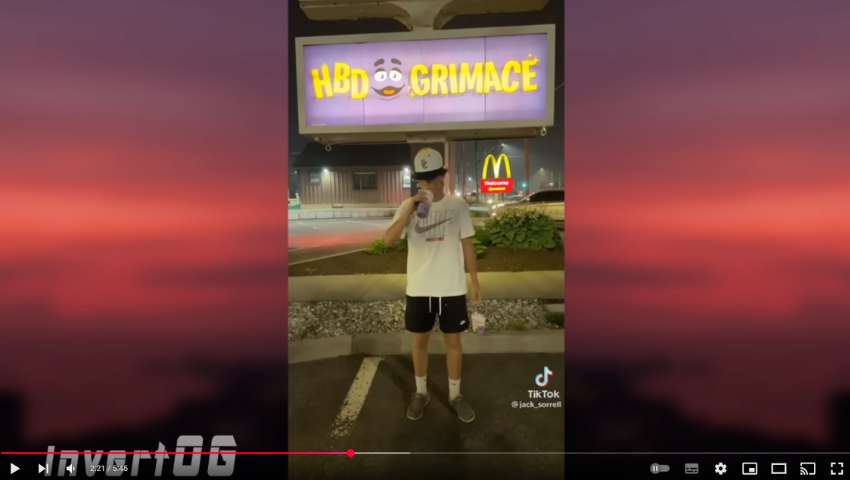
A known case study is “Grimace Shake”, a berry-flavored milkshake of McDonald’s. In 2023, the company launched the product and, all of a sudden, a TikTok trend went viral, showing users that tried the milkshake and ended up starring in “horror scenes. Through Social Listening, the company located the trend, analyzed the positive and funny sentiment and decided to include it in its strategy, instead of ignoring it. The company took part in the discussion and increased its brand engagement, especially with Gen Z. As a result, sales went up and the entire issue had a positive impact on the company’s quarterly financial results.
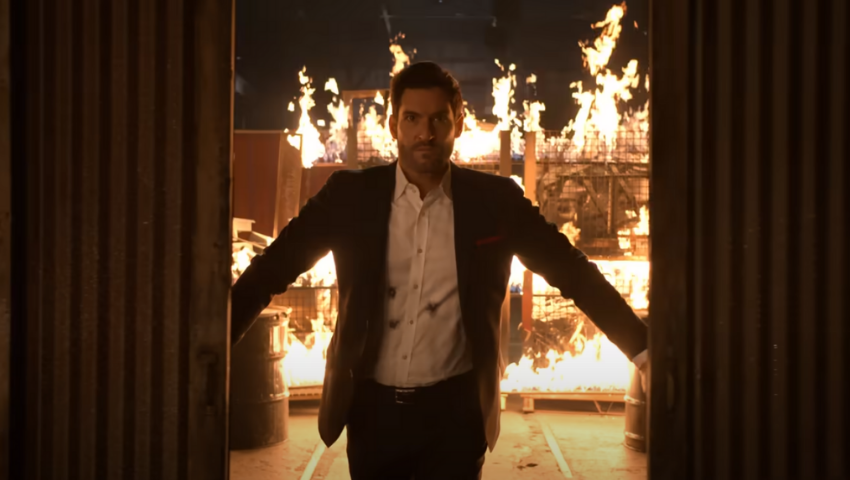
Another case study is “Lucifer” TV show. When FOX cancelled the show, fans launched a huge social media campaign with the #SaveLucifer hashtag. Through Social Listening, Netflix located the volume of relevant references and the extent of the discussion, analyzed the positive sentiment of users and decided to buy the show. As a result, Lucifer became one of the most popular shows on the platform, proving that properly reading of social media discussions can lead to smart strategic decisions.
2. Competitive intelligence for strategic advantage
Social Listening is not just about your brand, it is also about how consumers talk about your competitors. Through the monitoring of references, comments and reactions for other companies of your sector, you get a precious competitive advantage:
3. Detection of brand advocates and micro-influencers
In times when 87.3% of the adults worldwide use social media, discovering unsolicited influencers is crucial for success. Social Listening locates consumers who recommend your products spontaneously, without an agreement with your business.
Such supporters are gold for your brand. Strengthening such authentic “voices” on social media can increase the popularity of your brand and create trust through authentic word-of-mouth marketing.
The effectiveness of brand advocates lies with their credibility. As opposed to traditional influencers, who have hundreds of thousands of followers, micro-influencers and brand advocates are often part of smaller, but more engaged communities. The authenticity of their recommendations offsets their smaller reach, as their audiences tend to trust them more.
Moreover, Social Listening allows you to locate, not only people who talk positively about your brand, but also the reasons why they are doing so, the specific aspects of the products they glorify and the feelings they associate with a brand. Such information allows companies to develop more targeted strategies for the cultivation and maintenance of such relationships.
4. Data-driven marketing optimization for better results
With social media users in Greece spending 2 hours and 21 minutes daily on social media, opportunities for engagement are limitless. Social Listening allows you to understand how the sentiment about a topic evolves over time and prevent a negative publicity crisis, before it spreads to other channels.
Real-time Social Listening insights from all available social media channels allow you to trace trending topics, adjust your message and dynamically optimize your campaign. That is particularly important, when we know that users visit multiple platforms and their preferences evolve rapidly. Besides, social media do not operate as silos on a communication level, but they are inseparable. For example, a YouTube advertisement with many views can “transfer” to other channels very quickly, giving users the opportunity to discuss and comment on the topic, positively or negatively.
Case Studies:
A relevant case study is the Pantene campaign under the title #HairHasNoGender, which brought to the spotlight 5 queer persons, members of the Greek LGBTQ+ community. The YouTube video went viral and the discussion quickly passed to Facebook and X, with hundreds of users positively or negatively commenting on the content and the purpose of the advertisement.

Another similar case study from the Greek market is the “Whatever you want to be” campaign of AB Vassilopoulos supermarkets. On occasion of International Father’s Day, the father starring in the campaign let his daughter put makeup on him and cover his hair with colorful hairpins, which caused a long discussion on social media.

In order for the success of a campaign to be measured, one needs to be able to measure its popularity in all the channels that the campaign appeared on. The above examples are proof that an advertising campaign is not limited to the initial media it appeared on, but creates a network of discussions that expands horizontally to the digital ecosystem.
The value of Social Listening lies precisely with its ability to grasp the level of cross-platform spreading. Measuring the views of the initial video or comments below it, is not enough. We also need to monitor how the message transforms, how t is interpreted and reproduced in different channels.
Moreover, real-time insights allow companies to directly react to the developments. When a campaign causes strong reactions, positive or negative, one’s ability to adjust their strategy in real time can make a difference between failure and success. That means that Social Listening is not just a measurement tool. It complements Social Media Monitoring as a strategic adjustment tool that allows the flexible management of your communication strategy, depending on the way public discussion evolves.
Greece has an interesting digital landscape for Social Listening. With 6.59 million adult users (76.6% of the active population) active on social media, brands have access to a large audience.
Popular platforms in Greece:
Knowing the power of Social Listening is the first step. The next step is to use it to your advantage. With the right practices, tools and targets, you can turn the vast volume of online discussions into actually useful business actions. The next section lists simple and substantial steps towards starting or improving your strategy:
1. Setting strategic targets and KPIs
Successful Social Listening begins with clear and quantifiable targets. Instead of general pursuits, such as “improving your reputation”, you need to set specific targets that take into account qualitative elements, such as “increasing positive sentiment by 15% in 6 months” or “reducing the time of response to social media customer complaints by 40% in a year”.
Basic KPIs you need to monitor include brand sentiment evolution, Share of Voice compared to competitors, source significance (Impact, Reach), the speed of response to feedback, and the ROI of campaigns based on Social Listening insights.
2. Selection of tools and approach
In Clip News, we believe in combining the experience of our expert analysts with the potential of advanced technology. Automated tools may be able to process large volumes of data, but expert analysts offer context and are able to understand small differences in meaning that Natural Language Processing (NLP) or AI algorithms cannot.
Such “hybrid” approach proves particularly useful in the Greek online environment, where cultural references, the particularities of the Greek language and local expressions require a deep understanding of the social and cultural framework. While AI tools can locate keywords and basic sentiment patterns, they often miss important details, such as Greek irony, local dialects, cultural innuendos or references to Greek memes and viral content. Our experienced analysts recognize such elements and can interpret, not only what users say, but also why they say it, what they really mean and what is the broader impact on the brand on a local market level.
3. Integration in business strategy
Data collected from Social Listening need to be strategically allocated across the organisation structure of your business. Therefore, a data democratization system needs to be developed, in order for each department to be able to access the information they need, in the form they need it. Create a single ecosystem of information that supplies your marketing and sales’ departments, your customer service department and the R&D department.
Each department needs adjusted insights that meet its needs and targets. For example, the communication department needs real-time alerts to locate negative references to the brand, in order to effectively deal with a situation as quickly as possible. On the other hand, the R&D department needs analyses of data collected over a significant time period (e.g., quarter) regarding the unfulfilled needs of consumers, in order to schedule improvements in products or services.
Social Listening evolves constantly, going hand-in-hand with technological and social changes. Businesses are called to adjust to consumers moving to new platforms and demanding more customized experiences. In the following section, we are looking into the main trends that shape the future of Social Listening:
AI and Natural Language Processing are constantly improving in terms of understanding sarcasm, irony and the cultural context of discussions, while they speed up the processing of larger publicity data volumes. Constantly improving the real-time updating of social media data facilitates the quicker location of useful conclusions, while predictive analytics allow you to predict trends before they become mainstream.
An increasing number of top businesses worldwide are adopting proactive approaches. By analysing unusual peaks in the volume (buzz) of social media references or the abrupt increase of the number of negative references (sentiment), businesses manage to locate irregularities in discussion data, as well as emerging trends, months before they become mainstream.
At the same time, they invest in the development of complex performance models that connect Social Listening insights to quantifiable business results. The new generation of businesses combines Social Listening data with CRM, sales information, marketing KPIs, market research and consumer behavior analyses, creating a 360° customer profile that allows for super-customized experiences, often in real time. Such a holistic approach turns every contact with customers into an opportunity for a deeper connection and long-term devotion.
As data privacy regulations are becoming stricter, transparency in the use of data becomes crucial. For that reason, Media Monitoring and Social Listening platforms are “fishing” data from social media, always based on the restrictions set by every channel. “Ethical listening”, which respects user privacy and complies with EU’s GDPR, are main requirements for every Social Listening strategy.
With 5.2 billion social media users worldwide, the need for strategic Social Listening has never been greater for brands. Social Listening reveals opportunities hiding in the chaos of public discussions. Companies that invest in such “consumer intelligence tools” add to their weaponry a strategic advantage that allows them to innovate and protect their reputation more effectively.
In Clip News, we combine cutting-edge technology with the expertise of our analysts, in order to offer Social Listening solutions that turn data into useful information. In a constantly-evolving digital world, Social Listening is a necessary tool for every brand that wants to remain competitive.
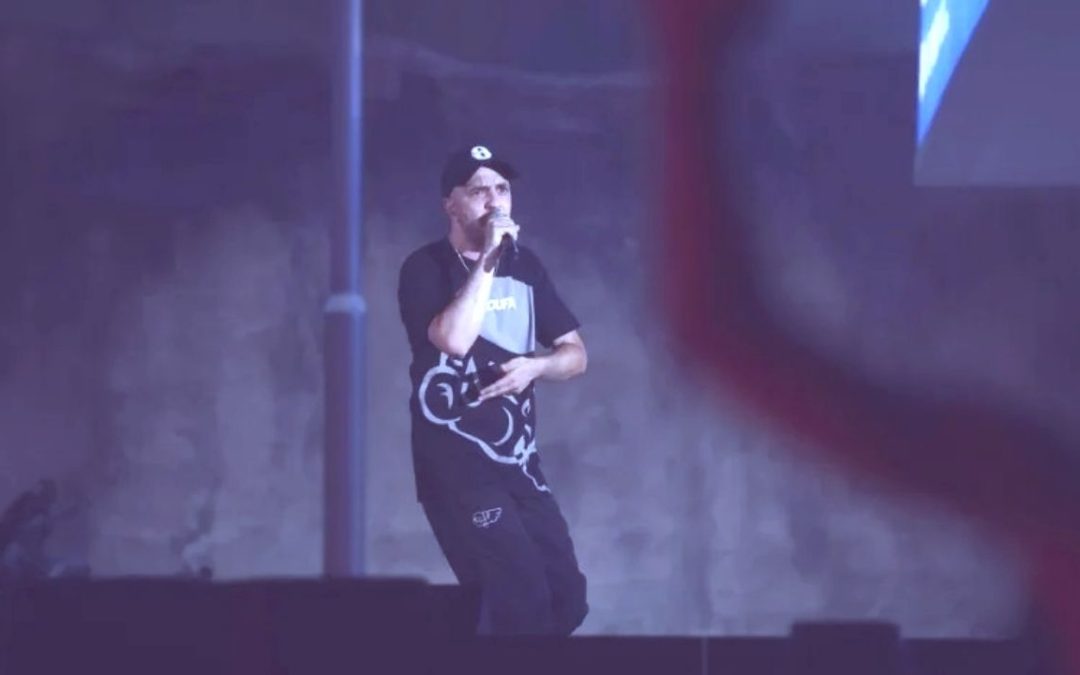
The success of LEX, with around 100,000 tickets sold out for his two concerts at OAKA within just a few days, sparked a wave of discussion on the internet and social media about the phenomenon-artist. With total catalogue streams of 270.2 million on Spotify and 75.6 million listens for the songs from his latest album “G.T.K.”, which also became the fastest platinum Greek record in the digital release era, it’s natural that he captures public attention regardless of age, gender, or musical preference.
Nevertheless, and contrary to what one might assume, data shows that the total number of references on the internet and social media in June 2025 is lower than that of 2022, when his two major concerts took place in Athens and Thessaloniki. More specifically, in July 2022 he filled the Panionios stadium in Nea Smyrni with 20,000 people, and in October of the same year, he performed at Kaftanzoglio Stadium in Thessaloniki for 30,000 spectators – a record number for a hip-hop concert in Greece.
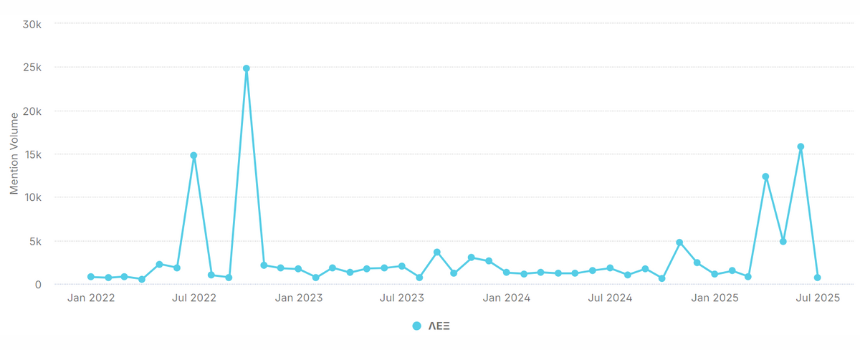
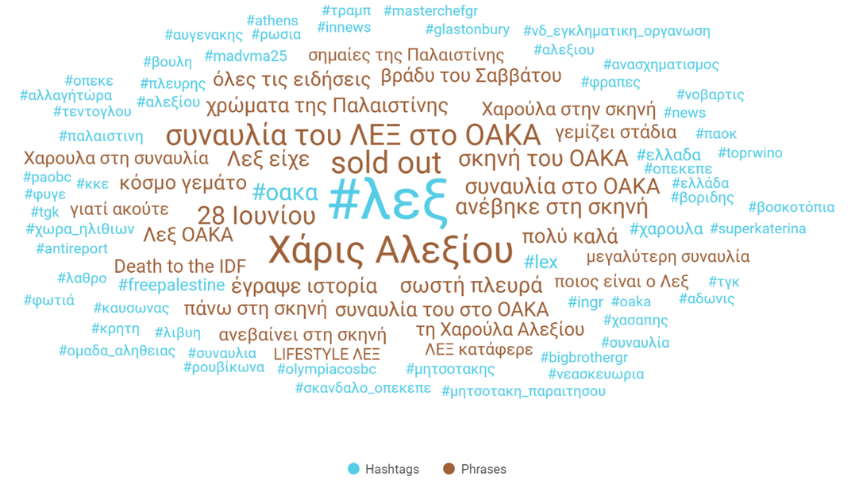
The range of public discourse around him has become particularly diverse lately: his relationship with Light and the latter’s sexist lyrics, as well as his non-condemnatory stance on Palestine, which was criticized as “silence.” At OAKA, however, the audience was impressed by his collaboration with Haroula Alexiou on the song “Fyge”, while the strong presence of political messages and Palestinian symbols elevated the discussion to new levels, transitioning from music to the social and political sphere.
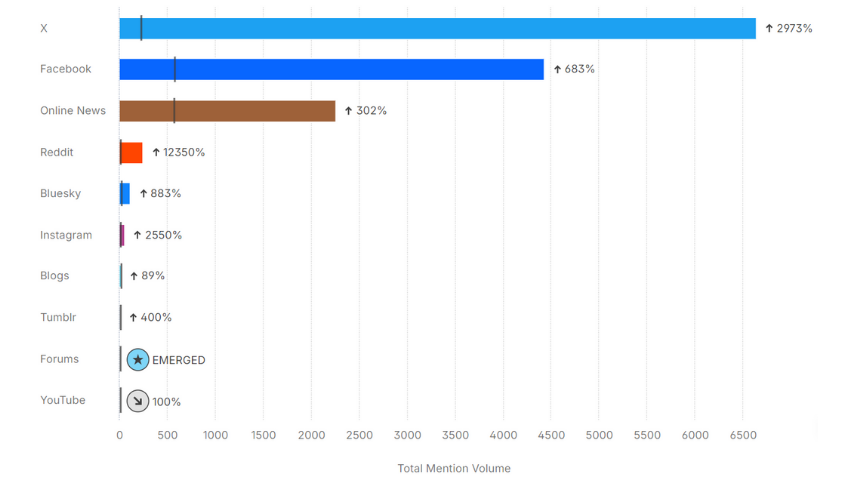
The most explosive rise in mentions of the June 2025 concerts was recorded on platforms like X, Facebook, websites, and more “alternative” communities like Reddit and forums. In contrast, Instagram seems to have a lower presence, due to the nature of its content: the chart only records relevant Instagram posts, while during the concerts it was Instagram stories that dominated – which are not tracked by the platforms.
LEX’s concerts generated massive digital interest not only for their artistic value but also for their social resonance. LEX’s presence, voice, and messages seem to represent an entire generation, and the online and social media discussion about him proves it.
Social Listening Tool: Brandwatch
Date Range: 01.01.22 – 02.07.25
Sources: Websites, Blogs, Forums, Social Media
Keywording/Analysis: Clip News
Search Limitations
The Brandwatch platform collects data from websites, blogs, forums, social media (X, Facebook, Reddit, Tumblr, etc.) with the restrictions defined by each channel. For example, discussions in closed forums and Facebook private groups, or Instagram Stories, are not collected. The above analysis provides an indicative approach, taking into account that varying the publicity data sample and time range may produce different insights.

Using the Brandwatch platform and the capabilities of social listening, our analysts recorded the dynamics of the conversation in Greece regarding the Middle East from May 1 to June 23, 2025. The analysis was based exclusively on data from X (Twitter), aiming to capture the online narrative of a multi-layered geopolitical event.
The volume of mentions on X reached 767,610, with two peaks:
These dates coincided with sharp increases in the volume of posts and comments, reflecting users’ intense emotional reactions. 
Until June 13, the discourse mainly focused on the Israel-Palestine conflict. The public conversation was not necessarily pro-Palestinian, but largely critical of Israel’s military and political actions. The tone was highly charged, with frequent comparisons to the Russia-Ukraine war and references to “double standards” by the West.
The cloud highlights hashtags such as #freepalestine, #genocide, #standwithisrael. The presence of hashtags like #Mitsotakis and #Mitsotakis_government indicates the domestic politicization of the discussion, with sarcastic remarks about the stance of the Greek government. 
By country:
By individual:

The vast majority of mentions carry a negative tone. The content is characterized by:
At the same time, there is a small but present share of neutral positions advocating for peace amid a deeply polarized climate.
The conflict in the Middle East is a profound human tragedy that triggers intense emotions, political disputes, and global reactions. Social listening acts as a mirror of public opinion, helping us understand how narratives are formed and which concerns dominate the most critical issues of our time.
Social Listening Tool: Brandwatch
Date Range: 01.05.25 – 23.06.25
Sources: X (Twitter)
Keywording/Analysis: Clip News
Search Restrictions
The Brandwatch platform collects data from websites, blogs, forums, social media (X, Facebook, Reddit, Tumblr, etc.) with the restrictions defined by each channel. For example, discussions in closed forums or Facebook private groups are not collected. The above analysis provides an indicative approach, taking into account that varying the publicity data sample and time range may produce different insights.

On June 18, 2025, as part of the “PR in Cannes” event, hosted by the International Communications Consultancy Organisation (ICCO), an insightful and timely panel discussion took place titled “Driving Measurable Impact in Media Intelligence & PR”, featuring three leading professionals in the field:
The discussion was held on LBB Beach, in a dynamic and quite hot setting (both literally and figuratively), where professionals from the fields of public relations, media monitoring, and data analysis exchanged views on the current state and prospects of the media intelligence industry.
As introduced by Zuzana Richterova, media intelligence refers to the process of monitoring, collecting, analyzing, and interpreting content from various media sources (print, digital, broadcast, and social) to extract meaningful insights about reputation, communication strategy, and decision-making for organizations and brands.
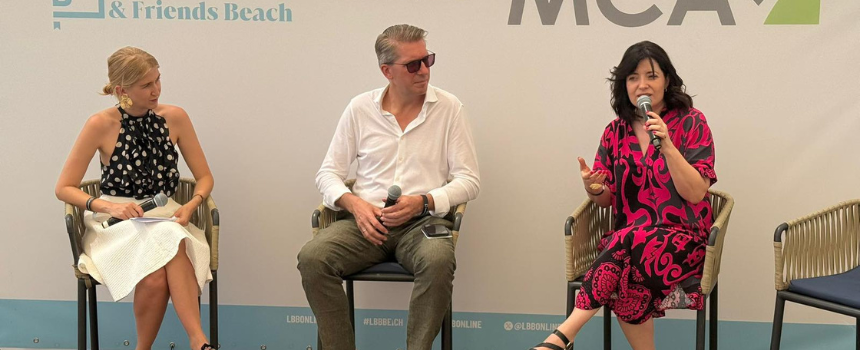
In her remarks, Katerina Kechagia presented the findings of the latest “State of the Industry Survey” (SOI) by FIBEP, the World’s Media Intelligence Association:

Florian Laszlo presented FIBEP’s “Media Rights Trust Initiative” (MRTI), a step toward fairer content licensing. Its aim is to build a collaborative framework among media monitoring agencies, publishers, PR professionals, and Collective Management Organizations (CMOs) by:
Anyone interested in learning more about the “Media Rights Trust Initiative” can visit fibep.info/mrti.
Industry professionals are expected to gather again at the World Media Intelligence Congress, which will take place this year in Düsseldorf, from September 30 to October 2, 2025.