Pizza Fan’s decision to end its collaboration with stand-up comedian Paris Roupos turned into one of the most intense communication crises recently recorded in the Greek market. The incident began as a reaction to one of the comedian’s jokes, but it quickly grew into a social and political phenomenon, sparking a flood of comments on social media and news websites. This incident serves as a reference point for how a brand can find itself -within just a few hours- at the center of a PR crisis that tests its limits, reputation, and communication strategy.
The total mentions on social media and websites reached 11,700 in the past week, with 8,400 mentions appearing in a single day (September 25)! It is truly difficult for a communication and marketing team to handle such a volume of publicity without having previously set up a media monitoring account with the appropriate keywords and alerts.
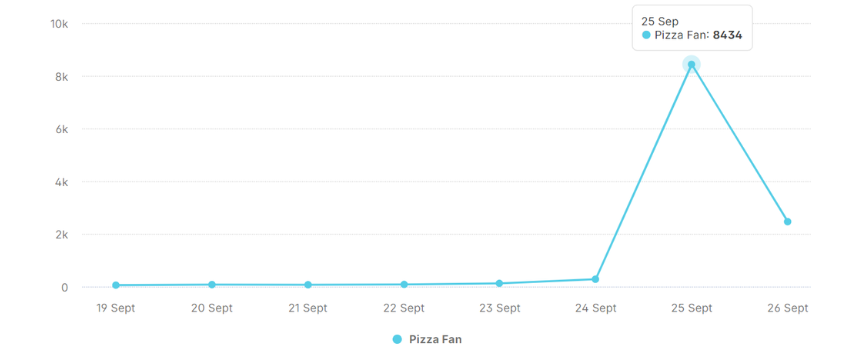
It should be noted that these 8,400 mentions of Pizza Fan do not concern comments under the company’s posts (owned media) but any reference to the brand elsewhere on social media, forums, websites, and blogs. For a brand to have a complete picture of its publicity and the extent of a communication crisis, it is not enough to monitor only the comments under its owned media; it must track the entire spectrum enabled by platforms such as Brandwatch.
Roupos’ comments during a stand-up performance, which included references to the Greek flag and historical events, were deemed offensive, leading to backlash against the pizza delivery chain. The company’s announcements on Facebook gathered thousands of user comments, many of which were negative. However, there were also positive, supportive, and neutral humorous comments.
X (formerly Twitter) fueled the discussion with numerous individual comments and hundreds of reposts. Prominent websites (based on Impact) amplified the incident through relevant publications, including protothema.gr, gazzetta.gr, news247.gr, iefimerida.gr, lifo.gr, and newsit.gr. These well-known websites also shared related posts on their owned channels on Facebook and X (Twitter). The topic was also discussed on Reddit in a thread titled “Pizza Fan fired Paris Roupos: What happened with the well-known comedian”.
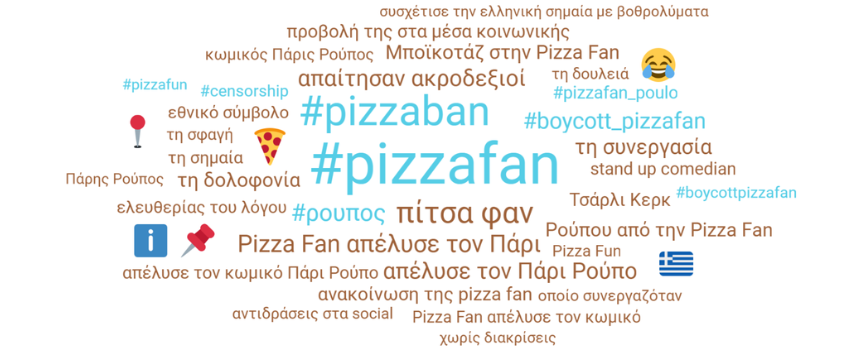
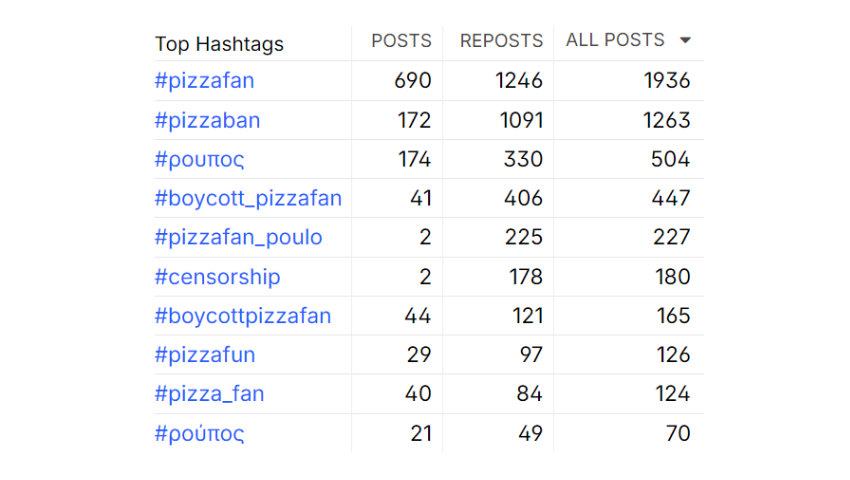
Following Roupos’ dismissal, social media became a battleground for opposing opinions, with some praising Pizza Fan for its stance and others condemning it. Many supporters of Roupos called for a boycott of Pizza Fan using hashtags such as #Pizzaban and #boycottpizzafan. They argue that the company’s decision reflects a capitulation to extreme pressures and emphasize the importance of protecting comedians’ right to satire and critique without fear.
As the reactions continue, Roupos has stated that he intends to take legal action against those he believes incited hatred toward him, including prominent political figures such as Konstantinos Bogdanos. In a YouTube video, Bogdanos called for the comedian’s dismissal, describing his jokes as an “insult to national symbols.”
Beyond the artistic and political dimensions, this case served as a loud reminder of how crucial it is for a company to strategically plan its collaborations. Selecting the right influencer for a brand must follow an in-depth analysis using social listening/digital listening tools like Brandwatch. The content they produce and the audiences they reach must be carefully evaluated before any partnership, as the public tends to associate the creator, directly or indirectly, with the brand. In an environment where the slightest spark can turn into a PR crisis, early risk detection and strategic preparedness become critical factors in safeguarding corporate reputation.
Analysis Identity
Social Listening / Digital Listening: Brandwatch
Date Range: 19-26.09.25
Sources: Internet & Social Media*
Keywording/Analysis: Clip News
*The analysis is based solely on publicly available data from the Internet and social media channels in Greece. The search was limited to the keywords “Pizza Fan” and “Paris Roupos” in various possible variations (English, Greek, Greeklish, with or without accents, etc.).
Search Limitations: The Brandwatch platform collects data from websites, blogs, forums, and social media (X, Facebook, Instagram, Reddit, Tumblr, etc.) subject to the restrictions set by each channel. For example, discussions in closed forums and Facebook private groups, or Instagram stories, are not collected.
The above analysis represents an indicative approach, taking into account that variations in sources and timeframe may produce a different picture.

Why numbers don’t tell the whole truth
In the world of communication and PR, reports and dashboards are filled with KPIs: reach, impressions, publicity volume. However, the truth is that numbers alone are not enough. The Barcelona Principles V4.0 of the International Association for the Measurement and Evaluation of Communication (AMEC) remind us that quantitative data must be combined with qualitative analysis.
This principle needs to permeate the entire field of communication; therefore, it also concerns the measurement and evaluation of a brand’s image on social media. In other words, social listening does not simply mean measuring how many times your brand has been mentioned on social media, but understanding “the why” and “how” behind every discussion, post, and reaction from the audience.
Real-time insights
In our times, a TikTok video can go viral within minutes or a tweet can gather hundreds of reposts. Real-time monitoring is a prerequisite for the survival of brands. By utilizing social listening tools, they detect trends before they become mainstream, adjusting the message and positioning accordingly.
Of course, when we talk about social listening, we don’t mean just monitoring your own posts, but any mention of the brand, anywhere on social media:
- Owned: The posts that you upload on the official social media pages of the brand, e.g., Facebook, LinkedIn, Instagram.
- Earned: The organic exposure that the brand gains without paying, e.g., comments, mentions.
- Shared: The content that is reproduced by the public, e.g., reposts, shares.
- Paid: It differs from paid advertising and refers to paid content, e.g., an Instagram post from a fashion influencer that was made after a commercial agreement with the brand.
Benchmarking forever
One of the most underrated advantages of social listening is the comparison with the competition. It is not only important how users talk about your brand but also how you position yourself against competitors. Besides the well-known share of voice (SoV), a deeper analysis of the data is needed, with measurements such as: SoV with sentiment (positive, neutral, negative) and SoV by social channel. Through continuous mapping of the dialogue, you can identify gaps left by other players and build a more targeted strategy.
Management starts before the crisis
Crises usually catch us off guard, but they do not arise suddenly. They begin with a negative experience with a retail chain posted on X or with a thread in a forum about a new car model. The ability to detect such warning signals in time through social listening can be the difference between a manageable situation and a blow to the brand’s reputation and sales.
From data to strategy
The time when companies could rely solely on post-campaign reports is over. The leading brands are those that have the ability to understand not only what is being said, but why it is being said and how this can be reversed or leveraged. In fact, social listening is a direct “X-Ray” that reveals the health of a brand, the dynamics of a market, and the psychology of the audience. The result is a more flexible communication strategy based on data.
The article was published on Daily Fax on September 24, 2025.
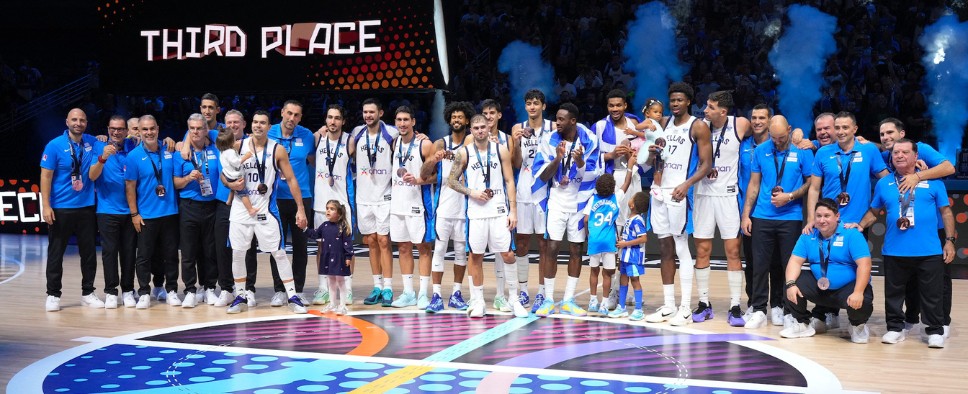
From August 27 to September 16, 2025, we analyzed more than 138,000 posts and comments on social media (X, Facebook, forums) regarding the participation of Greece men’s national basketball team in EuroBasket 2025, based exclusively on data from the Brandwatch platform, a global leader in social listening.
Objective: To understand how the team’s journey was reflected on social media, what the dominant sentiment was, and how the discussion transcended the boundaries of sports, touching on politics, national identity, and the overall image of Greek basketball.

Top Buzz Peaks
Comments and posts on social media recorded a huge increase on September 7 (VS Israel), on September 12 (VS Turkey), and on September 14 (VS Finland):

September 7 (VS Israel): Greece advanced to the quarter-finals after a thrilling victory with a score of 84-79, led by Giannis Antetokounmpo (37 points). The match generated huge buzz on social media as it combined athletic excellence and political tension. On social networks, expressions of national pride dominated on one hand, while politically charged hashtags (#freepalestine) were prominent on the other, linked to the developments in Gaza. A significant part of the discussion focused on the demand of Greek opposition political party SYRIZA to cancel the match. Despite the political tension, the victory became a point of unity and joy for the fans.
Indicative X posts with a significant number of RTs:

September 12 (VS Turkey): Greece lost with a score of 68-94 in the semi-final, in a match where they made 22 mistakes and never found their rhythm. The Turks, with Osman and Sengun as key players, completely dominated. There was widespread disappointment and intense criticism on Greek social media regarding the team’s and the coach’s choices, but also supportive comments.
Indicative X posts with a significant number of RTs:

Sengun’s post on social media after the game sparked reactions on Greek social media, as it seemed to reference the 1922 Asia Minor developments. The Turkish Federation also caused strong reactions with a post showing a Turkish player dunking in front of Antetokounmpo with the caption “No mercy.” This image led to an official complaint from the Hellenic Basketball Federation to FIBA and was eventually withdrawn. The tension on social media was twofold: sporting (criticism of the team) and political, intensifying the atmosphere of confrontation between Greece and Turkey.
Indicative X posts with a significant number of RTs:

September 14 (VS Finland): Greece won the bronze medal after 16 years, beating their opponent 92-89, with the last 5 minutes causing a stir on social media. The match was characterized by passion and teamwork, with Greece showing character and regaining their spirit after the loss in the semi-final. Emotional moments were recorded and commented on social media: Antetokounmpo, with the Greek flag on his back, was in tears, stating that “this is the greatest achievement of his career,” and team captain Kostas Papanikolaou expressed emotion and commitment for the future of the team. The discussion focused on the meaning of returning to the podium, national pride, and the new era that is opening up for Greek basketball.
Indicative X posts with a significant number of RTs: 
Sentiment Analysis
Sentiment analysis on social media shows a mainly positive image. The progress of Greece men’s national basketball team created emotional identification, with the positive tone prevailing in discussions about winning the medal.
- 54,64% positive (celebrations, national pride, exaltation of players and the coach)
- 35,97% neutral (descriptive posts, journalistic reports)
- 9,39% negative (criticism for the defeat against Turkey, political reactions to the match with Israel).

Sources Benchmarking
From September 7 (match against Israel) onwards, X took off with almost 100k mentions (+557% compared to the corresponding previous period). Public comments on Facebook saw a more moderate increase (+34%). Forums had a limited presence, but also saw a significant increase (+62%), showing that qualifying for the quarter-finals and the subsequent matches generated intense activity across all channels examined.

Notable peaks for Facebook and forums:
On Facebook, hundreds of public comments were gathered in the following posts, among others:

Related comments in forums recorded an increase on September 13 in threads with titles:
- “The thread of the official favourite – National basketball team” (on insomnia.gr)
- “Eurobasket 2025 and the end of an era” (on adslgr.com))
Countries & Key Players
Greece accounted for 72.4% of the total discussion, while the countries most frequently mentioned by Greek users on social media were Turkey (9.54%) and Israel (4.94%):

This shows that the discussion was strongly national in nature, but at the same time, specific countries were key points of reference as the discussions expanded to political issues.
Giannis Antetokounmpo was at the center of the discussion with 57% of mentions, as the undisputed leader on the court. He was followed by coach Vassilis Spanoulis (21.9%), Kostas Sloukas (11.2%), and team captain Kostas Papanikolaou (9.8%):

The Greek Freak’s leadership, both on the court (37 points against Israel, decisive moments in the bronze medal match) and symbolically (statements about the medal as ‘the greatest achievement of his life’), strengthened the team’s image and gave a new dimension to the discussion about identity and national pride.
Hashtags, Phrases & Emojis
The topics cloud highlights how the discussion combines sports, national identity and politics:

- Dominant hashtags: #eurobasket, #eurobasket2025, #grefin, #gretur, #greisr
- Phrases: “bronze medal”, “Greek national team”, “Congratulations”
- Emojis: 🏀👏🇬🇷❤️, expressing enthusiasm and national pride
At the same time, the discussion about the match against Israel was linked to hashtags such as #freepalestine, showing how political dynamics have penetrated the sporting dialogue.
Why Social Listening is Valuable
The analysis of Greece’s participation in EuroBasket 2025 clearly highlights the power of social listening:
- Identification of discussion peaks related to matches, results and critical events.
- Understanding the sentiment and how social media users experience the Greek national team’s progress.
- Highlighting the political and social dimensions that influence the image of a sporting event.
- Mapping key players and how they reinforce or influence public discourse.
For communications, marketing and PR professionals, the ability to monitor social media conversations in real time offers a strategic advantage:
- Enhancing positive publicity.
- Preparing for crises.
- Leveraging insights to improve products or services, content marketing, sponsorships and partnerships.
Try out the possibilities of social listening for your own industry, utilizing real-time data. Identify critical trends, valuable insights and opportunities that will give you a competitive edge.
Analysis Identity
Social Listening Tool: Brandwatch
Date Range: 27/08/25 – 16/09/25
Sources: Social Media*
Keywording/Analysis: Clip News
*The analysis is based solely on publicly available data from social media channels in Greece. The search was limited to the keywords “Eurobasket” and “National Basketball Team” in all possible variations (English, Greek, Greeklish, with or without accents, etc.) and to the hashtags of our National Team’s games (e.g., #grefin, #gretur, #greisr).
Search Limitations: The Brandwatch platform collects data from websites, blogs, forums, social media (X, Facebook, Reddit, Tumblr, etc.) with the restrictions defined by each channel. For example, discussions in closed forums and Facebook private groups, or Instagram Stories, are not collected. The above analysis provides an indicative approach, taking into account that varying sources and date range may produce different insights.
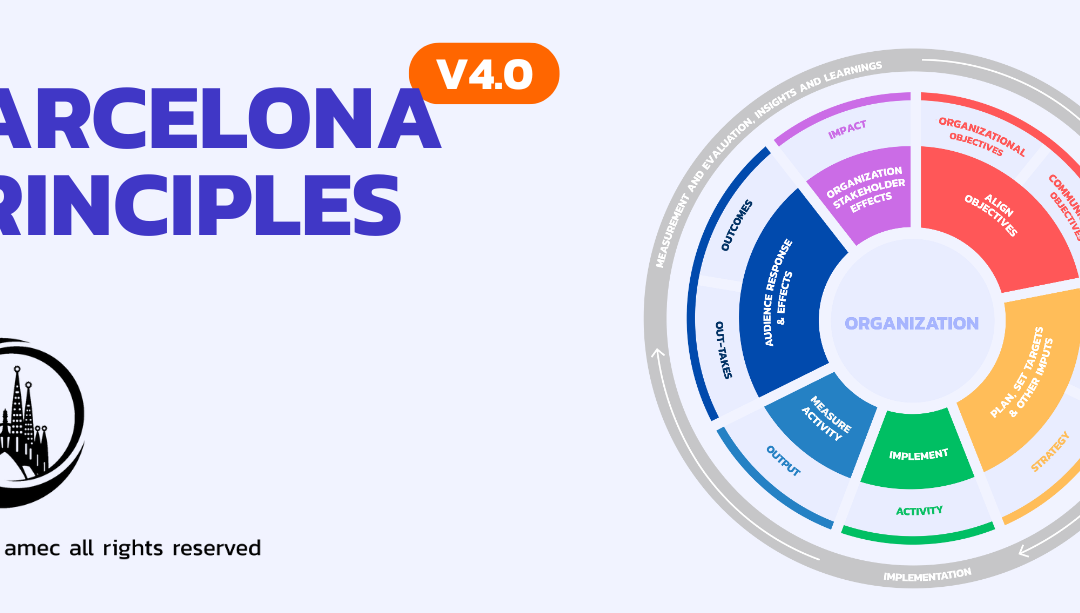
The International Association for the Measurement and Evaluation of Communication (AMEC) recently introduced the updated “Barcelona Principles V4.0” at its annual conference, held in Vienna. The “Barcelona Principles” are a set of seven fundamental principles that guide communication and public relations professionals in applying reliable, transparent, and effective methods for measuring and evaluating communication. They are intended for all communication professionals who wish to understand the impact of their activities in a systematic and effective way.
The evolution of the “Barcelona Principles” since 2010
The “Barcelona Principles” were first introduced in 2010 with the goal of establishing a common framework for measuring and evaluating communication and public relations globally. The need for these principles arose from the increasing complexity of the communication landscape and the diverse approaches to evaluating communication results, which often led to inconsistency and unreliability. The aim was to provide a transparent, reliable, and measurable framework so that industry professionals could accurately assess the effectiveness of their efforts.
Since then, the “Barcelona Principles” have been updated every five years to reflect changes and developments in the communication landscape and technology. The working group consists of experienced professionals from different countries and work environments, including corporate executives, academics, NGO representatives, and public sector officials, who voluntarily collaborate. Their shared purpose is to shape best practices in communication measurement and evaluation, ensuring that the principles developed are globally applicable, timely, and tailored to the needs of the industry.
Each revision includes adjustments and new additions that address contemporary challenges, such as the rapid growth of social media, the emphasis on qualitative data analysis, and the integration of artificial intelligence (AI). In this way, the principles remain current and effective as a guiding tool for measurement and evaluation in an ever-changing communication world.
Adapting to new challenges
Version 4.0 of the “Barcelona Principles” reflects the developments in today’s communication landscape. It incorporates significant changes, such as emphasizing the combination of qualitative and quantitative methods of analysis, the selection of clear and measurable objectives, a deeper understanding of target audiences, and the evaluation of impact across all relevant communication channels, both offline and online. Furthermore, it explicitly excludes the use of unreliable measurements, such as Advertising Value Equivalents (AVEs), as a vanity metric, and reinforces ethics, transparency, and responsible data and methods management, while also taking into account the challenges posed by artificial intelligence.
A key innovation is the integration of planning and measurement, which are often treated as two separate phases. In this edition, planning and measurement are merged into a unified, continuous process that is constantly reviewed and improved. Additionally, Version 4.0 of the “Barcelona Principles” places greater emphasis on the active involvement and understanding of stakeholder audiences as complex ecosystems, rather than simply as consumers or clients.
The significance for the Greek communication industry
For the Greek market, the value of the “Barcelona Principles V4.0” is significant, as they provide a global standard and guidance for the strategic measurement and evaluation of communication. Their application helps in-house communication and public relations departments, agencies (advertising and PR), media organizations, consulting firms, research companies, etc., to better understand the effectiveness of their efforts, improve their credibility, and strengthen public trust.
Clip News, as an AMEC member since 2023, proudly undertook the translation and adaptation of the comprehensive “Barcelona Principles V4.0” guide into Greek. With this initiative, Clip News enhances the level of knowledge and application of best practices in the Greek communication sector, providing reliable tools and training for achieving transparent and effective evaluation in every campaign. In this way, communication professionals in Greece gain easier access to international standards, strengthening their strategic capacity and positioning in an ever-evolving and demanding communication environment. You can download the e-book with the “Barcelona Principles V4.0” on the AMEC website.

At Clip News, we firmly believe that managing digital reputation is a cornerstone for every modern business and organization. As information spreads at light speed, the ability to monitor, understand, and shape an online presence has become more critical than ever. Within this context, we are especially proud of our VP Media Intelligence, Katerina Kechagia, who participated as an instructor in the renowned “Online Reputation & Public Relations” program by Knowcrunch.
The Importance of Real-Time Media Monitoring
In today’s digital landscape, a brand’s reputation is continuously shaped across multiple channels. From social media and news sites to blogs and forums, every mention, comment, or post can significantly influence public perception. This is precisely where the value of real-time media monitoring comes into play, offering continuous tracking and analysis of all online content related to a brand.
In her session titled “Digital Reputation Management Strategy – Brandwatch”, Ms. Kechagia focused on this critical aspect. Through practical case studies and advanced use of the Brandwatch platform, participants had the opportunity to explore techniques and strategies that enable:
- Instant Detection: Identifying brand mentions in real time to respond quickly to both positive and negative comments.
- Deeper Understanding: Conducting sentiment analysis, categorizing topics, and identifying key influencers.
- Strategic Shaping: Turning raw data into actionable insights that drive effective communication strategies and crisis management.
Brandwatch: A Cutting-Edge Tool
Brandwatch, one of the world’s leading media intelligence platforms, offers a comprehensive suite of functionalities for monitoring and analyzing data from online sources. In Ms. Kechagia’s session, participants explored its capabilities, including:
- Dashboards: Customizable dashboards for quick overviews of essential metrics.
- Mention Sources: Identifying where the brand is being discussed (social media, news sites, forums, blogs).
- Sentiment Analysis: Assessing whether mentions are positive, negative, or neutral.
- Tagging & Filters: Organizing and filtering data for targeted analysis.
- Analytics Overview: A holistic view of digital reputation performance.
- Topics & Authors Analytics: Detecting trending discussion themes and identifying influential voices (influencers, brand advocates).
- Alerts: Automated notifications for critical mentions related to your brand.
Commitment to Education and Innovation
Our participation in such a significant program highlights Clip News’ commitment to knowledge sharing and innovation in media analytics. As a company, we continuously invest in enhancing our tools and methodologies, ensuring that brands receive the most comprehensive and effective media monitoring solutions for reputation management.
We are convinced that continuous learning is the key for the communication and marketing industry to stay one step ahead of change. Learn more about the “Online Reputation & Public Relations” program by Knowcrunch and Ms. Kechagia’s contribution on knowcrunch.com.
 Portal Login