Portal Login


PR in Cannes: The Future of Media Intelligence
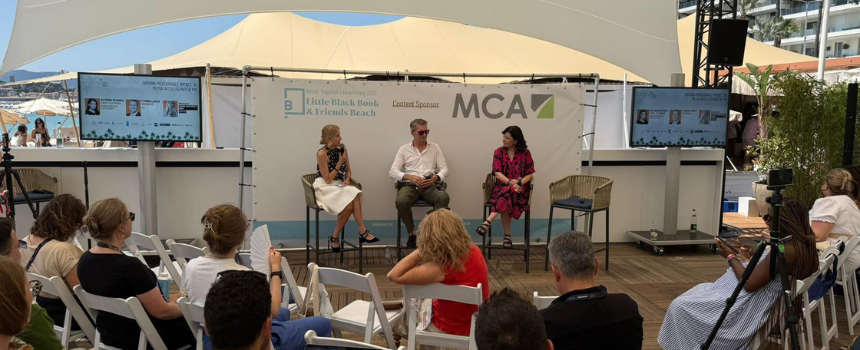
On June 18, 2025, as part of the “PR in Cannes” event, hosted by the International Communications Consultancy Organisation (ICCO), an insightful and timely panel discussion took place titled “Driving Measurable Impact in Media Intelligence & PR”, featuring three leading professionals in the field:
- Katerina Kechagia, Vice President of Clip News and of FIBEP
- Florian Laszlo, CEO of Austrian company OBSERVER
- Zuzana Richterova, Secretary of FIBEP
The discussion was held on LBB Beach, in a dynamic and quite hot setting (both literally and figuratively), where professionals from the fields of public relations, media monitoring, and data analysis exchanged views on the current state and prospects of the media intelligence industry.
What is Media Intelligence
As introduced by Zuzana Richterova, media intelligence refers to the process of monitoring, collecting, analyzing, and interpreting content from various media sources (print, digital, broadcast, and social) to extract meaningful insights about reputation, communication strategy, and decision-making for organizations and brands.

Key Challenges and Trends
In her remarks, Katerina Kechagia presented the findings of the latest “State of the Industry Survey” (SOI) by FIBEP, the World’s Media Intelligence Association:
- Stability and Resilience: 90% of companies in the industry expect stable or growing revenues over the next year. Media intelligence proves to be resilient and an essential service for businesses.
- AI – From Future to Present: One-third of companies already use AI for services such as content categorization, sentiment analysis, and language processing. AI accelerates workflows but also reshapes cost structures and client expectations.
- “More for Less” Mentality: Clients demand more insights, faster delivery, and lower cost. The pressure on efficiency requires service redesigns.
- Need for New Skills: 60% of companies report the need to retrain their staff to keep up with technological developments.
- Content Licensing: The biggest obstacle is the absence of a consistent global framework for fair, clear, and sustainable content use, which creates inequalities, costs, and legal uncertainties.
Media Rights Trust Initiative
Florian Laszlo presented FIBEP’s “Media Rights Trust Initiative” (MRTI), a step toward fairer content licensing. Its aim is to build a collaborative framework among media monitoring agencies, publishers, PR professionals, and Collective Management Organizations (CMOs) by:
- Creating unified and transparent content licensing models
- Balancing cost with value
- Promoting innovation while reducing legal uncertainties
Next Steps
Anyone interested in learning more about the “Media Rights Trust Initiative” can visit fibep.info/mrti.
Industry professionals are expected to gather again at the World Media Intelligence Congress, which will take place this year in Düsseldorf, from September 30 to October 2, 2025.