 Portal Login

Eurovision 2026: Ανατομία ενός trend μέσα από το Social Listening
Κάθε χρόνο, η Eurovision μετατρέπει την Ευρώπη σε ένα τεράστιο live room. Φέτος, ο 70ός Διαγωνισμός Τραγουδιού πραγματοποιήθηκε στη Βιέννη, με την Ελλάδα να συμμετέχει με τον Ακύλα και το τραγούδι «Ferto». Από τον ελληνικό εθνικό τελικό τον Φεβρουάριο έως τον μεγάλο τελικό στις 16 Μαΐου, η Eurovision δεν ήταν απλώς ένα τηλεοπτικό γεγονός. Ήταν μια διαρκής, εξελισσόμενη δημόσια συζήτηση στο ελληνικό internet.
Αναλύσαμε αυτή τη συζήτηση μέσα από την πλατφόρμα social listening της Brandwatch, για διάστημα σχεδόν τεσσάρων μηνών, από την 1η Φεβρουαρίου έως τις 18 Μαΐου 2026. Τα ευρήματα αποκαλύπτουν πώς ένα event με ρίζες στη δεκαετία του ’50 παραμένει ικανό να παράγει μία από τις πιο ζωντανές online συζητήσεις της χρονιάς.
Τα νούμερα που μιλούν μόνα τους
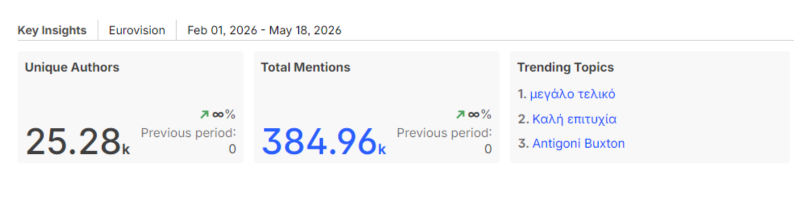
Σε διάστημα περίπου τεσσάρων μηνών, η online συζήτηση γύρω από την Eurovision 2026 στην Ελλάδα παρήγαγε:
- ~385.000 συνολικές αναφορές (mentions)
- 25.000 unique authors, διαφορετικές φωνές που συμμετείχαν ενεργά στη συζήτηση
Τα νούμερα αυτά αντικατοπτρίζουν ένα event που δεν «ανάβει» μόνο τη βραδιά του τελικού, αλλά συντηρεί μια διαρκή παρουσία στο ελληνικό internet για μήνες, με εκατοντάδες χιλιάδες αναφορές να συσσωρεύονται σταδιακά από τον εθνικό τελικό έως και μετά τα αποτελέσματα.
💡 Insight: Η Eurovision δεν είναι ένα event. Είναι ένα content ecosystem που ζει και εξελίσσεται για μήνες. Για brands και επικοινωνιακές ομάδες, αυτό σημαίνει ότι τα παράθυρα ευκαιρίας δεν περιορίζονται στη βραδιά του τελικού.
Το timeline του trend
Η συζήτηση γύρω από την Eurovision 2026 δεν ακολούθησε μια γραμμική πορεία. Είχε τρεις διακριτές φάσεις, καθεμία με τη δική της δυναμική.
Φάση 1: Ο εθνικός τελικός (Φεβρουάριος)
Το πρώτο μεγάλο spike καταγράφηκε τη βραδιά του ελληνικού εθνικού τελικού «Sing for Greece» στις 15 Φεβρουαρίου, με τις αναφορές να κορυφώνονται κατά τη διάρκεια και αμέσως μετά την ανακοίνωση του αποτελέσματος, φτάνοντας τις 16.853 αναφορές. Η ανακοίνωση του Ακύλα ως εκπροσώπου της Ελλάδας πυροδότησε έντονη συζήτηση: ενθουσιασμό, αμφισβήτηση και προσδοκίες.
Φάση 2: Η «σιωπηλή» περίοδος (Μάρτιος – αρχές Μαΐου)
Στη συνέχεια η συζήτηση επέστρεψε σε χαμηλά επίπεδα, μεταξύ 300 και 1.500 mentions ημερησίως. Ένα αξιοσημείωτο spike καταγράφηκε στις 11 Μαρτίου (2.943 mentions), με αφορμή την επίσημη κυκλοφορία του video clip του «Ferto», το οποίο ανανέωσε το ενδιαφέρον του κοινού και επανέφερε τη συζήτηση για την ελληνική συμμετοχή. Η Eurovision «σιγόκαιγε» στο παρασκήνιο, παρούσα αλλά όχι dominant.
Φάση 3: Η έκρηξη (Μάιος)
Από τις αρχές Μαΐου η συζήτηση άρχισε να ανεβαίνει σταδιακά, για να εκτοξευτεί στον Α’ ημιτελικό της 12ης Μαΐου (29.696 mentions), όπου η Ελλάδα πέρασε στον τελικό. Η κορύφωση ήρθε τη βραδιά του τελικού: από τις 22:00 του Σαββάτου 16 Μαΐου, με την έναρξη της αναμετάδοσης, οι αναφορές εκτοξεύτηκαν, φτάνοντας στο απόλυτο peak κατά την ανακοίνωση των αποτελεσμάτων, γύρω στις 02:00 τα ξημερώματα. Συνολικά, το 24ωρο που συμπεριέλαβε τον τελικό παρήγαγε 78.355 mentions, το υψηλότερο νούμερο ολόκληρης της περιόδου.
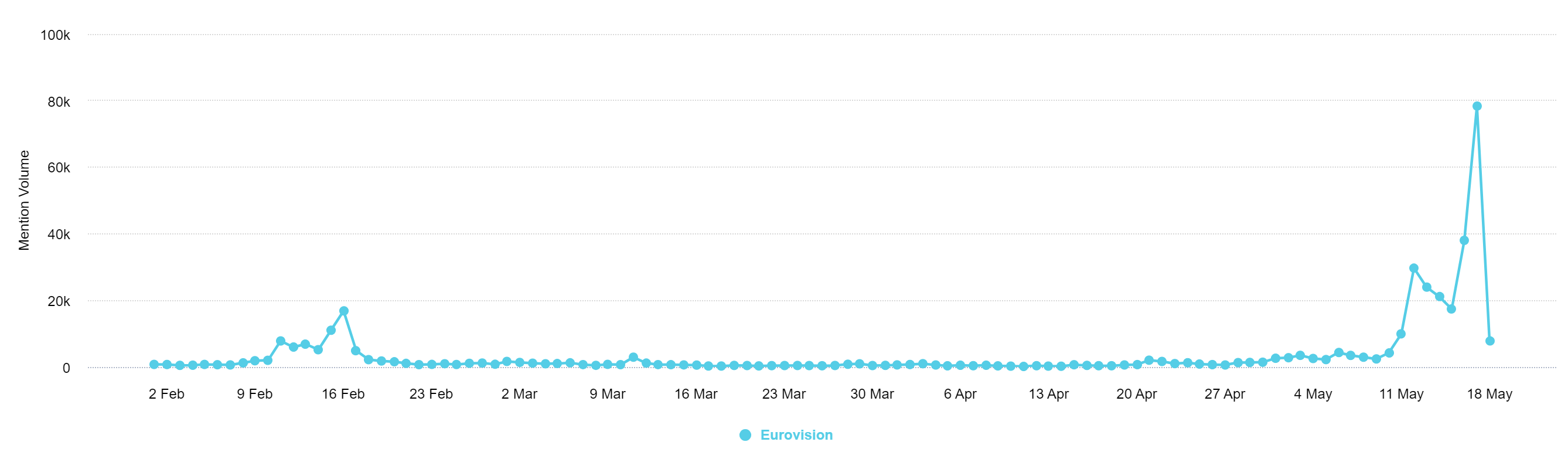
Η δημόσια συζήτηση δεν κορυφώθηκε μετά τον τελικό. Κορυφώθηκε την ώρα που εξελισσόταν.
💡 Insight: Η Eurovision είναι ένα από τα λίγα events που πυροδοτεί αληθινά real-time conversation. Το κοινό δεν σχολιάζει αργότερα, σχολιάζει παράλληλα με αυτό που βλέπει. Αυτό το pattern της ζωντανής, ταυτόχρονης συζήτησης είναι κρίσιμη πληροφορία για brands που θέλουν να συμμετάσχουν τη σωστή στιγμή
Πού έγινε η συζήτηση
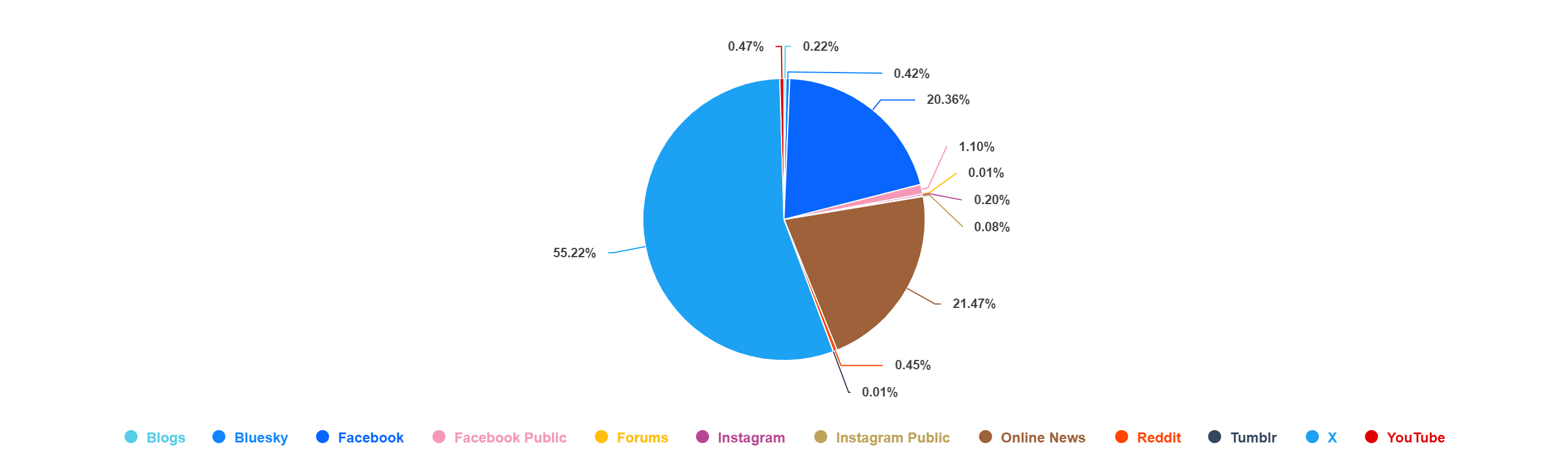
Η Eurovision 2026 δεν έζησε σε μία μόνο πλατφόρμα. Η συζήτηση εξαπλώθηκε σε social media, ενημερωτικά websites και ψηφιακές κοινότητες, δημιουργώντας ένα πολυήμερο trend δημοσιότητας με χιλιάδες αντιδράσεις σε πραγματικό χρόνο, δημοσιεύματα και online συζητήσεις.
Τι συζητούσε πραγματικά το ελληνικό κοινό
Η ανάγνωση των mentions αποκαλύπτει ότι η συζήτηση ξεπέρασε κατά πολύ τον ίδιο τον διαγωνισμό. Αναδύθηκαν τουλάχιστον πέντε διακριτές θεματικές:
Ο Ακύλας, το «Ferto» και η 10η θέση
Η ελληνική συμμετοχή ήταν φυσικά στο επίκεντρο, από την ανακοίνωση του Ακύλα τον Φεβρουάριο έως την κυκλοφορία του video clip τον Μάρτιο και την τελική του εμφάνιση στη Βιέννη. Η 10η θέση με 220 βαθμούς πυροδότησε έντονες αντιδράσεις. Χαρακτηριστική η δήλωση του Φωκά Ευαγγελινού: «Κι εγώ στενοχωρήθηκα και ήθελα κάτι παραπάνω, αλλά κάναμε ό,τι καλύτερο μπορούσαμε», μια φράση που αποτύπωσε το συναίσθημα μεγάλης μερίδας του κοινού. Αντίβαρο στη στενοχώρια ήταν η δημόσια στήριξη του Γιάννη Αντετοκούνμπο, ο οποίος έγραψε «My winner» για τον Ακύλα, ένα post που αναπαράχθηκε μαζικά και έγινε ένα από τα πιο shared στιγμιότυπα της βραδιάς.
Meme culture & viral moments
User-generated χιουμοριστικό περιεχόμενο, reaction videos και memes συνέβαλαν σημαντικά στη διάχυση της συζήτησης γύρω από τη Eurovision 2026, με χαρακτηριστικό παράδειγμα reaction videos για το «Ferto» που κυκλοφόρησαν ευρέως και έφτασαν σε κοινό πέρα από τους core eurofans. Η δυναμική αυτή επιβεβαιώνει ότι το χιούμορ και το viral περιεχόμενο παραμένουν από τους ισχυρότερους μηχανισμούς διάδοσης online συζητήσεων, ιδιαίτερα σε real-time cultural events όπως η Eurovision.
Η νικήτρια Βουλγαρία και η «οσμή σκανδάλου»
Η νίκη της Βουλγαρίας με το «Bangaranga» της Dara βρήκε σημαντική κάλυψη στην ελληνική συζήτηση, τόσο για την αποθέωση της καλλιτέχνιδας στο αεροδρόμιο της Σόφιας, όσο και για ένα ερώτημα που ανέκυψε γρήγορα: η EBU φέρεται να ρωτούσε τη Βουλγαρία το μεσημέρι της ημέρας του τελικού αν μπορεί να αναλάβει τη διοργάνωση του 2027, πριν ανακοινωθεί το αποτέλεσμα. Το γεγονός αυτό τροφοδότησε έντονα σχόλια και διαμαρτυρίες για τη διαφάνεια του διαγωνισμού. Η διαφάνεια του διαγωνισμού αμφισβητήθηκε και σε σχόλια ότι “μαγειρεύτηκαν” τα αποτελέσματα ώστε να βγει πρώτη η Βουλγαρία, για να αποφευχθεί το ενδεχόμενο να κερδίσει το Ισραήλ.
Το political angle
Η Eurovision αποτέλεσε αφορμή και για πολιτικού ή κοινωνικού χαρακτήρα συζητήσεις, οι οποίες μεταφέρθηκαν και στο ελληνικό online conversation. Δηλώσεις πολιτικών προσώπων, debates γύρω από το televoting, αλλά και διεθνείς εξελίξεις που συνδέθηκαν έμμεσα με τον διαγωνισμό, τροφοδότησαν ένα παράλληλο επίπεδο δημόσιας συζήτησης πέρα από το καθαρά μουσικό κομμάτι του event. Αυτό το pattern, όπου ένα μουσικό γεγονός λειτουργεί ως αφορμή για ευρύτερο κοινωνικό και πολιτικό σχολιασμό, αποτελεί διαχρονικό χαρακτηριστικό της Eurovision και επιβεβαιώθηκε και φέτος μέσα από τα data.
Η Κύπρος και η Antigoni
Η κυπριακή συμμετοχή είχε αισθητή παρουσία στην ελληνική συζήτηση. Η δήλωση της Antigoni Buxton κατά την επιστροφή της στην Κύπρο, «Το νιώθω λίγο ως αποτυχία», πυροδότησε συναισθηματικές αντιδράσεις και έγινε ένα από τα πιο σχολιασμένα στιγμιότυπα της post-event φάσης. Η κοινή γλώσσα και η πολιτιστική εγγύτητα των δύο χωρών αντικατοπτρίζεται ξεκάθαρα στα data.
💡 Insight: Η Eurovision δεν είναι απλώς ένας διαγωνισμός τραγουδιού. Είναι ένα cultural event που πυροδοτεί παράλληλες συζητήσεις για ταυτότητα, πολιτική, χιούμορ και συλλογική εμπειρία. Το social listening επιτρέπει τον εντοπισμό αυτών των θεματικών σε πραγματικό χρόνο και βοηθά στην κατανόηση του τι πραγματικά απασχολεί το κοινό, πέρα από τα επίσημα αποτελέσματα.
Όταν τα social media συναντούν τα online media | social → media → social loop
Ένα από τα πιο ενδιαφέροντα patterns που αναδύθηκαν από την ανάλυση είναι ο τρόπος που αλληλεπίδρασαν social media και online media κατά τη διάρκεια της Eurovision 2026. Τα online media δεν δημιούργησαν τη συζήτηση, την ενίσχυσαν. Η κοινότητα στο X κινήθηκε πρώτη: αντιδράσεις σε πραγματικό χρόνο, hashtags, reposts, σχόλια για την εμφάνιση, τη βαθμολογία, τους νικητές. Στη συνέχεια τα online media κάλυψαν το γεγονός, αντλώντας από αυτό που συζητιόταν ήδη στα social. Και το media coverage επέστρεψε πίσω στα social ως νέο περιεχόμενο για αναφορές και σχολιασμό.
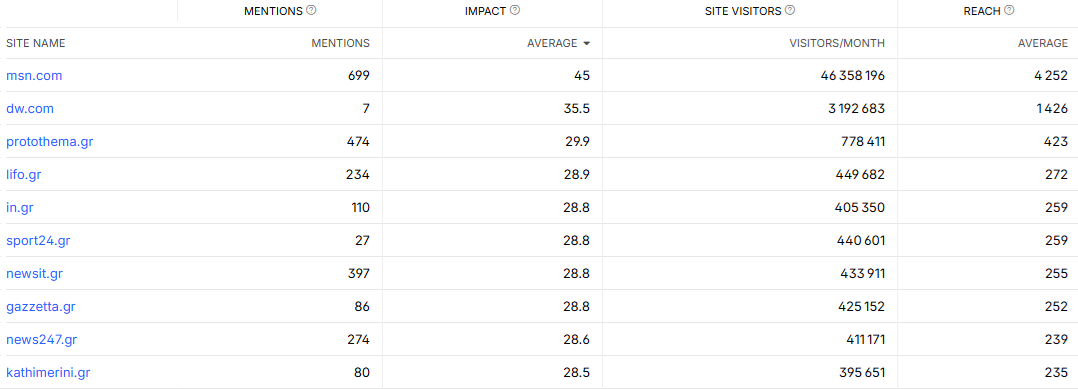
Αξιοσημείωτη είναι η παρουσία του gazzetta.gr, αθλητικού site, στα top, καθώς και του dw.com, του γερμανικού δημόσιου ραδιοτηλεοπτικού φορέα, που υποδηλώνει ότι η ελληνική συμμετοχή βρήκε απήχηση και σε διεθνείς πηγές.
💡 Insight: Στη σύγχρονη επικοινωνία, social media και online media δεν λειτουργούν ξεχωριστά, τροφοδοτούν το ένα το άλλο σε συνεχή loop. Για brands και επικοινωνιακές ομάδες που θέλουν να αξιοποιήσουν ένα μεγάλο event, η παρουσία και στα δύο επίπεδα δεν είναι επιλογή, είναι προϋπόθεση.
Key Takeaways για brands και επικοινωνιακές ομάδες
Η Eurovision 2026 επιβεβαίωσε κάτι που το social listening κάνει ορατό: τα μεγάλα cultural events δεν δημιουργούν μία μόνο συζήτηση. Δημιουργούν πολλές παράλληλες συζητήσεις σε πολλαπλές πλατφόρμες (social media, online media και ψηφιακές κοινότητες).
Η δημόσια συζήτηση ξεκίνησε από τον ελληνικό εθνικό τελικό, κορυφώθηκε κατά τη διάρκεια της live μετάδοσης του τελικού και συνέχισε να τροφοδοτείται από reactions, memes, media coverage και online commentary ακόμη και μετά την ανακοίνωση των αποτελεσμάτων.
Για brands και επικοινωνιακές ομάδες, η παρακολούθηση της συζήτησης σε πραγματικό χρόνο δεν σημαίνει απλώς μέτρηση. Σημαίνει κατανόηση. Και αυτή η κατανόηση είναι που μετατρέπει τα data σε αποφάσεις.
Σε ένα περιβάλλον όπου οι δημόσιες συζητήσεις διαμορφώνονται σε πραγματικό χρόνο, το social listening δεν αποτελεί πλέον απλώς εργαλείο monitoring, αλλά εργαλείο κατανόησης της δημόσιας εικόνας, των trends και της συμπεριφοράς του κοινού.
Η Clip News παρέχει υπηρεσίες social media monitoring και social listening για brands και εταιρείες επικοινωνίας, αξιοποιώντας δεδομένα και ανάλυση για την εξαγωγή ουσιαστικών insights. Για περισσότερες πληροφορίες, συμπληρώστε την παρακάτω φόρμα και θα επικοινωνήσουμε μαζί σας.
Ταυτότητα ανάλυσης
Social Listening Tool: Brandwatch
Date Range: 1 Φεβρουαρίου – 18 Μαΐου 2026
Sources: Social Media*, online news, blogs και άλλα
Scope: Δημόσιες online αναφορές και social conversations στα ελληνικά
Keywording/Analysis: Clip News
*Η ανάλυση βασίζεται μόνο σε διαθέσιμα δημόσια δεδομένα από κανάλια social media και online news στην Ελλάδα.
Περιορισμοί Αναζήτησης: Η πλατφόρμα Brandwatch συλλέγει δεδομένα από websites, blogs, forums, social media (X, Facebook, Instagram, Reddit, Tumblr, κ.α.) με τους περιορισμούς που ορίζει κάθε μέσο. Για παράδειγμα, οι συζητήσεις σε κλειστά forums και Facebook private groups ή τα Instagram Stories δεν συλλέγονται. Η παραπάνω ανάλυση αποτελεί μια ενδεικτική προσέγγιση, λαμβάνοντας υπόψη ότι διαφοροποίηση σε πηγές και χρονικό διάστημα μπορεί να φέρει μια διαφορετική εικόνα.