What should you evaluate before deciding where to invest your time and budget in the year ahead?
For many businesses, November and December are when communications plans for the coming year begin to take shape. New objectives, campaigns, communication channels and budgets are all on the agenda. But how many of these decisions are based on solid evidence, and how many rely on assumptions?
“We believe our brand’s reputation has improved.” “Our latest campaign performed well.” “Our competitors are getting more media attention than we are.” These statements may well be true. Without a systematic evaluation, however, they remain assumptions.
Before finalizing your communications plan for 2027, consider these five essential questions.
1. What picture of your brand emerged in 2026?
The number of media mentions and social media references is a useful indicator of your brand’s visibility. But numbers alone cannot tell you how your brand is being perceived An increase in media coverage might be driven by a successful corporate initiative or by an incident that sparked negative reactions. To build a more complete picture, look at:
- Key topics: Which issues and conversations was your brand most frequently associated with?
- Sentiment: How did the balance of positive, neutral and negative mentions evolve?
- Coverage trends: Which events triggered significant increases or decreases in media mentions?
Quantitative and qualitative media analysis can reveal not only how often your brand appeared in the media, but also the context surrounding that coverage.
A question to ask yourself: Do you know how many mentions your company received, and can you explain what drove that coverage?
2. How effective were your communications activities?
A campaign that generates extensive media coverage has not necessarily achieved its communications objectives.
For example, if your goal was to raise awareness of a new service, counting the resulting media mentions is only a starting point. You also need to assess whether your key messages were communicated, whether coverage appeared in relevant media outlets and whether those outlets reached your intended audience.
Equally, a campaign with fewer mentions may deliver greater communications value if it secures meaningful coverage in carefully targeted media. When evaluating your communications activities, consider:
- The media coverage generated by each campaign, announcement or corporate initiative.
- How consistently your key messages appeared in that coverage.
- How relevant the media outlets and sources were to your target audiences.
Media analysis can help assess how effectively your messages were communicated through the media. Measuring broader outcomes, such as changes in audience attitudes or sales, requires additional data. This distinction is also central to the Barcelona Principles V4.0, which emphasize the importance of looking beyond media coverage when evaluating communications performance.
A question to ask yourself: Do you evaluate your communications activities by the volume of coverage they generate, or against the objectives you set from the outset?
3. How did your media presence compare with your competitors?
Evaluating your communications performance becomes more meaningful when you consider it in the context of your wider market. Which competitor initiatives attracted the most media attention? Which topics did they dominate? Which partnerships or announcements generated significant coverage? Systematic competitor monitoring can reveal communications priorities, emerging trends and opportunities to differentiate your brand. One useful metric is Share of Voice (SoV), which measures the proportion of media coverage your brand receives compared with selected competitors, within a defined set of sources and topics.
For a meaningful comparison, examine:
- Your brand’s Share of Voice relative to key competitors.
- The topics on which each company gained the greatest visibility.
- The communications activities and initiatives that stood out throughout the year.
A question to ask yourself: Do you know where your brand has a stronger media presence than its competitors, and where there is room to improve?
4. Which media channels and sources contributed most to your coverage?
Not all media outlets and digital platforms are equally relevant to every business. For some organizations, coverage in financial and industry-specific publications may be particularly valuable. For others, public conversations on social media, television, radio or coverage in international markets may play a more important role.
Evaluating your media coverage by source helps you understand where your brand is gaining visibility and which channels deserve closer attention in your plans for the coming year. Focus on three areas:
- Coverage distribution: Which types of media generated the most mentions?
- Source relevance: Which media outlets and platforms reach the audiences that matter to your business?
- Communications opportunities: Are there channels or markets with potential that are not currently part of your strategy?
The volume of media mentions does not necessarily reflect influence. Assessing the value of a source also requires an understanding of its content, its relevance to your target audience and, where data is available, its actual reach and impact.
A question to ask yourself: Are your communication channel choices driven by data, or mainly by the approaches you have followed in previous years?
5. What will you do differently in 2027?
The value of a year-end communications review goes beyond documenting what happened. What matters most is how you use those findings to inform future decisions. If your analysis reveals limited visibility around an important industry topic, you can make strengthening that presence a priority. If certain key messages did not receive the exposure you expected, you can adjust your communications approach accordingly. The next step is to turn these findings into specific, measurable objectives.
For example:
- Build visibility around a strategic topic: Track relevant media mentions and changes in Share of Voice.
- Improve communications around new products or services: Evaluate key message coverage and visibility in targeted media outlets.
- Gain a better understanding of public perception: Regularly analyze sentiment, key topics and shifts in media coverage.
It is equally important to decide how frequently you will review performance. Monthly reporting can support marketing and communications teams in their day-to-day decisions, while a more consolidated quarterly analysis can give senior management a clearer view of progress.
Establishing your monitoring processes and performance metrics early allows you to begin the year with a consistent measurement framework. This makes it easier to compare results over time, starting from the beginning of 2027.
A question to ask yourself: Have you only defined what you want to achieve in 2027, or have you also decided how you will measure your progress?
From Reviewing Performance to Planning Ahead
If you found some of these questions difficult to answer, it may be worth reassessing the data you use to evaluate your communications. Identifying these gaps is a valuable first step towards planning for the year ahead.
Through its Media Monitoring and Reporting & Analysis services, Clip News helps businesses evaluate their media coverage, monitor competitors and turn findings into informed communications decisions.
Planning Your Communications for 2027?
Contact us using the form below, or request a free demo to discover how Clip News’ Media Monitoring and Reporting & Analysis services can help you achieve your communications goals.
From Manual Scrolling to Creator Intelligence: Why Manual Monitoring No Longer Cuts It
Why Brands Don’t Have Full Visibility of Their Creators, Partners and Competitors
Brands are now investing significant resources in social media, creators, influencers and digital partnerships, regardless of the industry they operate in. Content creators, brand ambassadors, partners, corporate pages and competitors produce enormous volumes of content every day across Facebook, Instagram, TikTok, YouTube, LinkedIn and X.
The question is no longer whether you are monitoring these activities. The question is how systematically you are doing it and how quickly you can turn that information into decisions. This is not a problem of intent. It is a problem of tools. And it is exactly the gap that social media page monitoring for brands is designed to close.
Market Problem #1: You Don’t Know What Was Posted and When
Creator and partner collaborations now make up a significant share of many brands’ marketing budgets. A typical deal with a popular creator or influencer can cost anywhere from a few hundred to several thousand euros. Multiply that by the number of partnerships you are managing simultaneously and you have a substantial portion of your media budget on the line.
Every collaboration typically involves specific terms around content publication, hashtags or the promotion of specific offers. But who verifies that everything was delivered as agreed?
In most cases, the process relies on manual checks or confirmation from the partner themselves. When there are only a few partnerships, this is manageable. When you are tracking dozens of creators at once, the process quickly becomes time-consuming and it is easy to miss something. The complexity grows even further when the same creators are simultaneously working with more than one competing brand.
The result: you are paying for content without knowing whether it went live on time, whether it included the agreed message or whether it performed the way you expected.
Market Problem #2: You Find Out About Competitor Moves After They Have Already Happened
Competitors don’t send you a heads-up. A competitor launched a new partnership and you found out days later from a post? They launched a new product or service and you only noticed when it started showing up on social media? They shifted their communication angle around topics like sustainability, AI or customer experience and you only caught on when it started influencing the conversation in your industry?
Competitive intelligence on social media is one of the most underrated advantages a marketing team can have. It is not just about monitoring competitors. It is about understanding where the industry and market are heading, which topics are resonating, which formats are winning engagement, when a competitor is ramping up their communications presence and who is ultimately gaining more reach on social media.
Knowing what they post is no longer enough. You need a clear picture of who is working with whom, what is performing and where the competition is heading.
Without systematic monitoring, you are always on the back foot. You react instead of anticipate. And in an environment where trends, campaigns and partnerships evolve daily, that delay can cost you opportunities, time and competitive advantage.
In Practice #1: Creator Tracking in a Multi-Channel Campaign
A brand ran a two-month campaign involving more than 20 creators across Instagram, TikTok and YouTube. The partnerships included specific publication dates, hashtag requirements, product mentions and promotion of specific offers.
Through Clip News’s Social Media Page Monitoring, the marketing team automatically tracked all posts in real time. The system recorded:
- Whether content was published according to the agreed schedule
- Whether the required hashtags, mentions and promotional messages were included
- Performance metrics for each post: likes, comments, shares, views and engagement score
- A consolidated view per creator, platform and campaign
The result? Creators who had not stuck to the agreed timeline were identified, something that would have been nearly impossible to catch without automated tracking. The marketing team also gained a clear picture of which creators genuinely delivered.
In Practice #2: Competition Benchmarking Before a New Product Launch
Before launching a new product category, an telecom company wanted to map how its main competitors were moving on social media, not selectively, but comprehensively, over a three-month period.
Using Clip News’s Social Media Page Monitoring, the competitors’ corporate pages were systematically monitored across Facebook, Instagram, TikTok, LinkedIn and X. The analysis revealed:
- Two competitors had already started positioning themselves in the new category a month before the company’s own launch.
- TikTok had the highest engagement ratio in the industry, while the company’s budget was heavily concentrated on Facebook.
- The top competitor was posting on Instagram 4-5 times a week with consistent engagement growth, while their own frequency was 1-2 times.
- A specific type of short-form video content had significantly higher engagement than any other format in the industry.
These insights directly shaped the launch strategy: budget was reallocated towards TikTok, posting frequency was increased and short-form video became the central content format. The team did not copy the competition. They studied it and decided where to differentiate.
The Solution: Social Media Page Monitoring from Clip News
Clip News, with a presence in media monitoring and analysis since 1992, developed a specialist social media page monitoring service for brands and agencies that need systematic, automated visibility of their creators and competitors.
What the service covers:
- Monitoring across LinkedIn, Facebook, Instagram, TikTok, X and YouTube
- Automatic collection of all posts, reels and shorts from selected pages and accounts
- Full metrics per post: account followers, likes, comments, shares, views, engagement score, URL and publication date
- Email alerts for new content throughout the day
- A central platform with a unified view across all social channels
Key applications for brands and agencies:
- Creator Evaluation: Verify that agreed content was published on the scheduled days and assess performance per creator
- Competitive Benchmarking: Comparative analysis of competitor posting frequency, topics and engagement across all channels
- Strategic Content Planning: Use engagement data to improve content strategy based on proven patterns
Clip News’s Social Media Page Monitoring works as a creator intelligence tool for brands and agencies that need a consolidated view of creator, partner and competitor activity across TikTok, Instagram, Facebook, X, YouTube and LinkedIn.
With automated monitoring and real-time data, marketing teams can track collaborations, competitor activity and emerging industry trends more easily and effectively.
For more information on monitoring your partnerships and competitors, get in touch or fill in the form below.
This article was originally published on advertising.gr on 09/06/2026.
How to Get a Complete Picture of Your Brand Reputation and Competitor Activity
In today’s business environment, social media is a living organism that constantly generates data, opportunities and, at times, crises. For any company that wants to stay ahead of the curve, the critical question is no longer whether to have a social media presence, but how to listen to and analyse everything that happens on it.
Every day, millions of users talk about brands, products and trends, often without tagging the official company page. Within this ocean of information, Clip News offers the strategic compass that every modern Marketing department and PR agency needs: social media monitoring for companies. To get a truly 360° view of their market, businesses need a combination of two complementary services that, while distinct, work hand in hand.
1. Keyword Monitoring: Your Brand’s Listening Tool
Imagine being able to sit in on every online conversation where your company name, your products or even your direct competitors are mentioned. That is exactly what Keyword Monitoring gives you.
Through targeted keyword-based tracking, you can monitor in real time what consumers are saying about you on Facebook, Instagram, X, LinkedIn, TikTok and YouTube. Crucially, the tracking works even when users have not tagged your official company page.
It is the ultimate reputation management tool, allowing communications teams to respond immediately to negative comments before they escalate into a crisis, while also identifying positive mentions that can be turned into valuable brand advocacy. Every mention comes with full metrics, including follower count, likes, shares, post URL and date, turning raw data into strategic decisions.
2. Page Monitoring: Keeping an Eye on Competitors and the Market
While Keyword Monitoring focuses on what is being said, Page Monitoring focuses on who is saying it and how the market is moving overall. It involves the systematic monitoring of specific pages and accounts (Facebook Pages, Instagram Accounts, LinkedIn Accounts, X profiles and more) that are strategically important to your business.
Here, the focus shifts to the activity of competitors, partners and industry influencers. What campaigns are they running right now? What engagement are they achieving? How is their audience responding? With Page Monitoring, you gain valuable benchmarks and insights that allow you to adjust your own strategy based on real data, not guesswork.
Stronger Together: Why You Need Both
A common mistake many companies make is choosing only one of these two approaches. But fragmented information leads to incomplete conclusions.
- If you rely solely on Keyword Monitoring, you will know what is being said about you, your industry or your competitors across social media. But you will miss the structured content strategy that competitors, partners and industry influencers are following through their official channels: what they are publishing, when, how often and how much engagement each post is generating.
- Conversely, if you focus only on Page Monitoring, you will see what others are publishing on their pages and how their content is performing, but you will miss the organic user conversations that are actively shaping your brand’s reputation.
Using both Clip News services together ensures nothing is left to chance. It is the difference between simply being on social media and truly owning it.
In the information age, knowledge is power, but the right filtered information is the ultimate competitive advantage. Clip News, with years of experience and advanced technology, transforms thousands of social data points into actionable knowledge, helping businesses make decisions with confidence.
To find out more about our Keyword and Page Monitoring solutions, get in touch by filling in the form below.
This article was originally published on epixeiro.gr on 11/05/2026.
Why monitoring creators and competitors on social media is becoming a key tool for betting marketing teams
The online betting market in Greece has matured. A few years ago, social media was just another channel that companies were testing out. Today, it is a core competitive battleground, with creators, betting shows, YouTube channels and sports media pages producing high volumes of content about the industry every single day. In this landscape, betting social media monitoring has become a key tool for marketing teams. The challenge is no longer a lack of information. It is knowing how to systematically track what is happening around your brand and turn that information into decisions.
From Volume to Quality
For many years, the logic was simple: more creators meant greater reach. Today, however, marketing teams are juggling dozens of simultaneous partnerships across multiple channels. Each one comes with its own terms, deliverables and audience.
That volume has created a new problem: not a lack of content, but a lack of visibility. Two areas are drawing increasing attention: monitoring creator partnerships and competitive intelligence on social media.
Every collaboration with a creator or sponsored account typically involves specific terms: publication timing, hashtags, promotion of specific offers and content format. But who actually verifies that everything was delivered as agreed? In practice, marketing teams need answers to straightforward but critical questions:
- Was the agreed content published?
- When was it published and on which platform?
- Did it include all the agreed elements?
- What was its performance?
- Which creators deliver the best results per channel?
When partnerships are few, manual checks are manageable. When you are tracking dozens of accounts across multiple channels at once, the process quickly becomes time-consuming and things start falling through the cracks.
In practice
A betting company found that several creator posts were difficult to track down after the fact, especially when they had gone live across different platforms at different times. Through automated monitoring, the marketing team gained a consolidated view of all relevant posts and their key metrics. This significantly reduced the time spent on verification and made it far easier to evaluate partnerships and report results internally.
Competition Monitoring: What Are Competitors Doing and When Do You Find Out?
Competitive intelligence on social media is one of the most underrated advantages a marketing team can have in the betting industry. It is not about copying what competitors do. It is about understanding where the market is heading and being able to make decisions based on data, not gut feeling.
Systematically monitoring competitors’ social media pages gives marketing teams visibility into:
- Posting frequency per platform
- The creators each brand is working with
- The key topics being promoted
- The content formats that perform best
- The platforms driving the most engagement
In practice
By tracking its main competitors across Instagram, TikTok, Facebook, YouTube and LinkedIn, a betting company was able to analyse which creators each brand was working with, which content formats drove the highest engagement and how often each competitor was putting out content.
The team did not copy the competition. They studied it and used those insights to shape their own strategy.
The Solution: Social Media Page Monitoring
At Clip News, we built a dedicated betting social media monitoring service to give marketing teams in the betting industry full, automated visibility of their creators, partners and competitors across TikTok, Instagram, Facebook, X, YouTube and LinkedIn. The service automatically collects posts and delivers key metrics, including likes, comments, shares, views, engagement score, followers and publication date, all from a single platform, in real time.
From Scattered Data to a Unified View
Monitoring gives you the data. A unified view gives you direction.
Today, marketing teams at betting companies have to keep track of an increasingly complex ecosystem. Creators, partners, betting shows, sports media pages and competitors all generate large volumes of activity every day, and manual monitoring simply cannot keep up.
The real value lies not just in capturing all of that activity, but in being able to consolidate, organise and act on it, so you can evaluate partnerships more effectively, spot trends earlier and make decisions based on what is actually happening.
If you would like to see how it works for your company, get in touch using the form below and take advantage of our Social Media Monitoring offer: 2 months free on an annual subscription covering all social media channels (Facebook, Instagram, LinkedIn, TikTok, X, YouTube).
If you would like to receive a sample report for your industry, drop us an email at marketing@clipnews.gr with the subject line “Sample Betting Report”.
Every year, Eurovision turns Europe into one massive live room. This year, the 70th Eurovision Song Contest took place in Vienna, with Greece represented by Akylas and his entry “Ferto.” From the Greek national final in February to the Grand Final on May 16th, Eurovision wasn’t just a television event. It was a continuous, evolving public conversation playing out across the Greek internet.
We analyzed that conversation using Brandwatch, a social listening platform, over a period of nearly four months, from February 1st to May 18th, 2026. What the data reveals is how an event with roots in the 1950s can still generate one of the most vibrant online conversations of the year.
The Numbers That Speak for Themselves
Over a period of nearly four months, the online conversation around Eurovision 2026 in Greece generated:
- ~385,000 total mentions
- 25,000 unique authors, distinct voices who actively took part in the conversation
These numbers reflect an event that doesn’t just “switch on” the night of the final. It sustains a continuous presence across the Greek internet for months, with hundreds of thousands of mentions building gradually from the national final all the way through the aftermath of the results.
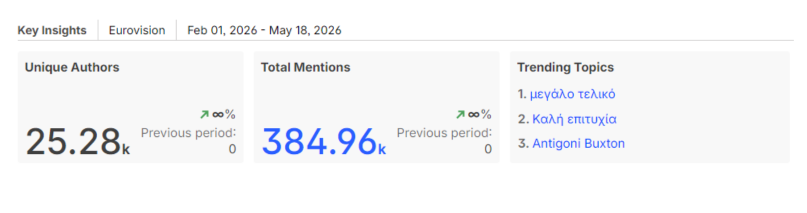
💡 Insight: Eurovision isn’t a single event. It’s a content ecosystem that lives and evolves over months. For brands and communications teams, this means the windows of opportunity extend well beyond the night of the final.
The Timeline of the Trend
The conversation around Eurovision 2026 didn’t follow a straight line. It unfolded in three distinct phases, each with its own dynamic.
Phase 1: The National Final (February)
The first major spike came on the night of the Greek national final, “Sing for Greece,” on February 15th, with mentions peaking during and immediately after the announcement of the result, reaching 16,853 references. The selection of Akylas as Greece’s representative ignited an intense public reaction: enthusiasm, skepticism, and anticipation in equal measure.
Phase 2: The Quiet Period (March – early May)
The conversation then settled back to lower levels, between 300 and 1,500 daily mentions. A notable spike appeared on March 11th (2,943 mentions), triggered by the official release of the “Ferto” music video, which reignited public interest and brought the Greek entry back into the conversation. Eurovision was simmering in the background — present, but not dominant.
Phase 3: The Explosion (May)
From early May, the conversation began climbing steadily, surging at the Semi-Final on May 12th (29,696 mentions), when Greece qualified for the Grand Final. The peak came on the night of the final itself: from 10:00 PM on Saturday, May 16th, as the broadcast began, mentions shot up, reaching their absolute high point around 2:00 AM as the results were announced. The 24-hour period surrounding the final generated 78,355 mentions, the highest single-day figure of the entire period.
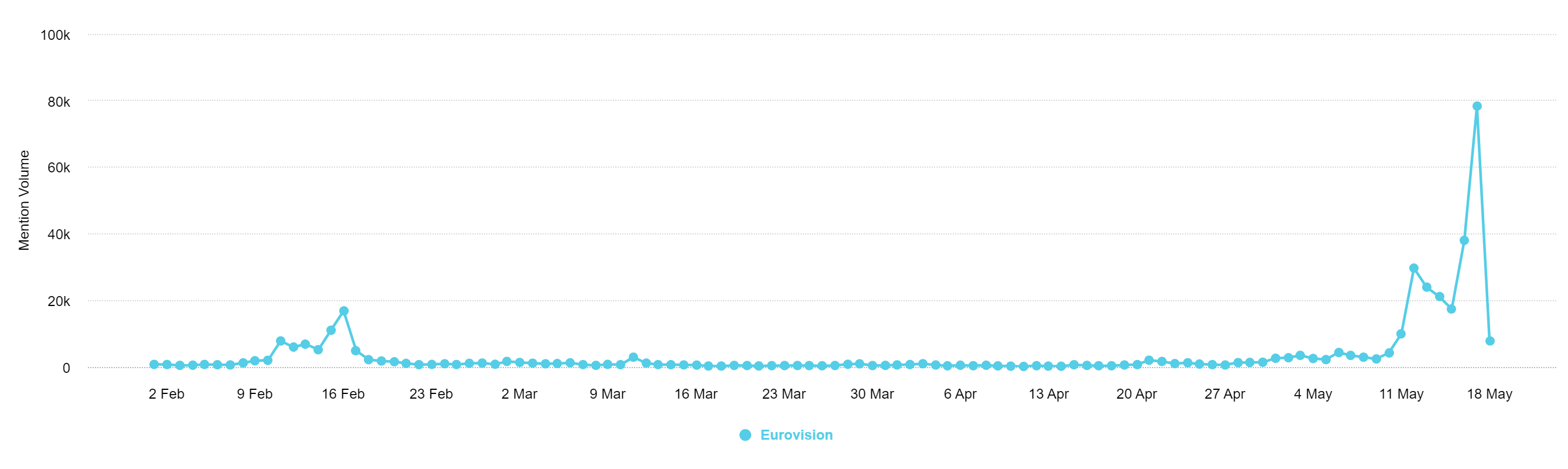
The conversation didn’t peak after the final. It peaked while it was happening. 💡 Insight: Eurovision is one of the few events that generates truly real-time conversation. Audiences don’t watch and comment later, they comment as it unfolds. Understanding this live, simultaneous engagement pattern is critical for any brand that wants to be part of the conversation at the right moment.
Where the Conversation Happened
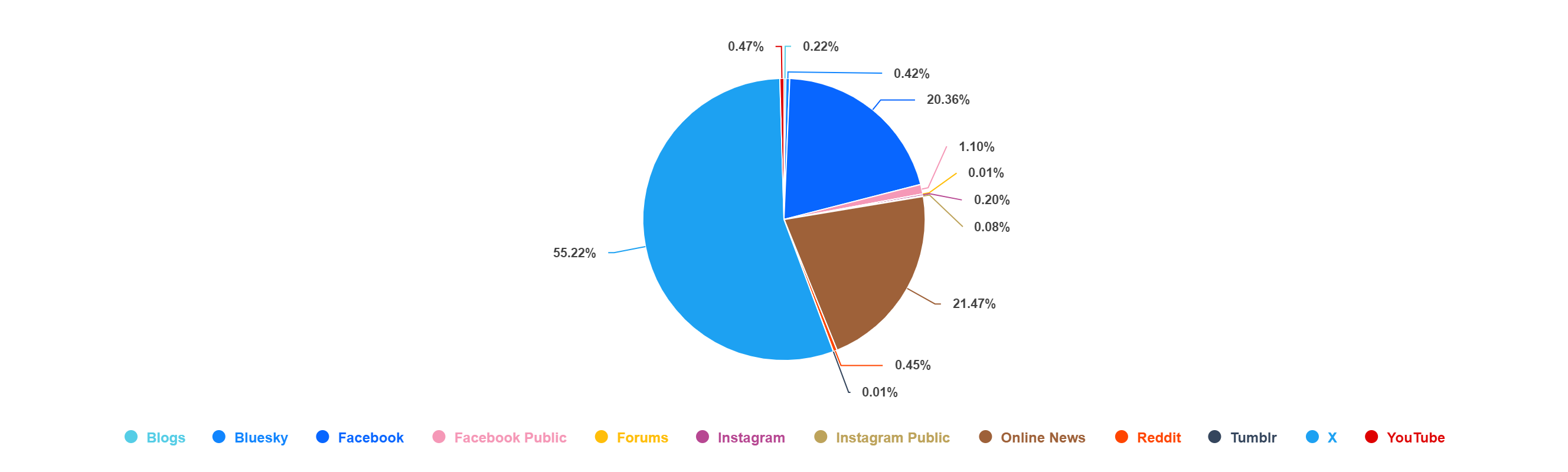
Eurovision 2026 didn’t live on just one platform. The conversation spread across social media, news websites, and digital communities, creating a multi-day trend with thousands of real-time reactions, articles, and online discussions.
What People Were Actually Talking About
Reading through the mentions reveals that the conversation stretched well beyond the contest itself. At least five distinct themes emerged:
Akylas, “Ferto” and 10th Place
The Greek entry was naturally at the center of it all, from Akylas’ selection in February, to the release of the music video in March, to his final performance in Vienna. The 10th place finish with 220 points sparked a wave of reactions. A telling moment came from Fokas Evangelinos, who said: “I was disappointed too and wanted more, but we did the best we could”, a line that captured the feeling of a large part of the audience. Balancing the disappointment was the very public support of Giannis Antetokounmpo, who posted “My winner” about Akylas, a post that was widely shared and became one of the most talked-about moments of the night.
Meme Culture & Viral Moments
User-generated humor, reaction videos, and memes played a significant role in amplifying the conversation around Eurovision 2026, with reaction videos about “Ferto” circulating widely and reaching audiences well beyond the show’s core fanbase. This dynamic confirms that humor and viral content remain among the most powerful drivers of online conversation, particularly around real-time cultural events like Eurovision.
Bulgaria’s Win and the “Smell of Scandal”
Bulgaria’s victory with Dara’s “Bangaranga” received significant coverage in the Greek conversation, both for the artist’s triumphant reception at Sofia Airport, and for a question that quickly surfaced: the EBU reportedly asked Bulgaria on the afternoon of the final whether it could host the 2027 contest, before the results had been announced. This fuelled heated commentary and calls for greater transparency in the competition. Questions around that transparency were further amplified by comments suggesting the results had been manipulated to ensure Bulgaria’s victory and to prevent Israel from winning.
The Political Angle
Eurovision also became a backdrop for political and social debate with statements from public figures, controversies around the televoting results, and international developments that fed into the Greek online conversation. This pattern, where a music event becomes a springboard for broader social and political commentary, is a longstanding feature of Eurovision and this year was no exception.
Cyprus and Antigoni
The Cypriot entry had a noticeable presence in the Greek conversation. Antigoni Buxton’s words on returning to Cyprus, “I feel it a little like a failure”, triggered an emotional response and became one of the most discussed post-event moments. The shared language and cultural closeness between Greece and Cyprus is clearly reflected in the data.
💡 Insight: Eurovision isn’t just a song contest. It’s a cultural event that sparks parallel conversations about identity, politics, humor and shared experience. Social listening allows you to identify these themes in real time and to understand what truly matters to audiences, beyond the official results.
The social → media → social loop
One of the most revealing patterns to emerge from the analysis is the dynamic between social media and online media during Eurovision 2026. Online media didn’t create the conversation, they amplified it. The community on X moved first: real-time reactions, hashtags, reposts, commentary on the performances, the scores, the winners. Online outlets then picked up the story, drawing on what was already in circulation across social platforms. And that coverage fed back into social media as new material for further references and commentary.
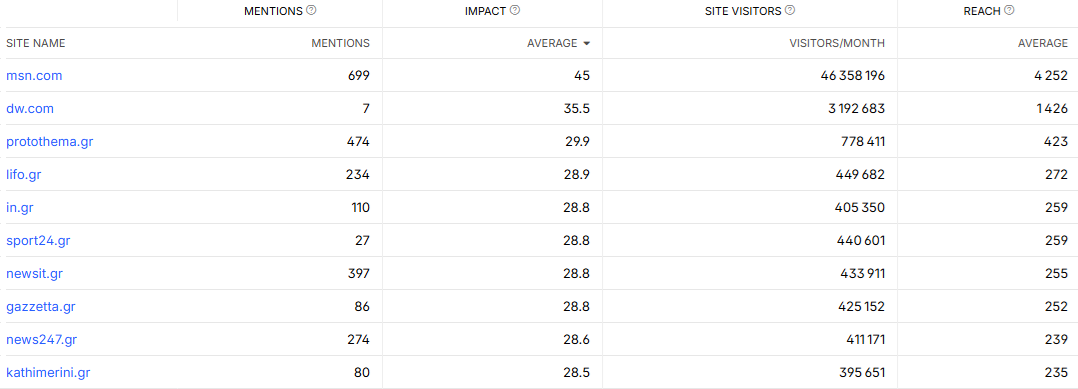 Worth noting is the presence of gazzetta.gr, a sports-focused outlet, among the top sources, as well as dw.com, the German public broadcaster, suggesting that the Greek entry found resonance beyond domestic sources.
💡 Insight: In modern communications, social media and online media don’t operate in silos, they fuel each other in a continuous loop. For brands and communications teams looking to leverage a major event, being present on both sides of that equation isn’t optional, it’s essential.
Key Takeaways for Brands and Communications Teams
Eurovision 2026 confirmed something that social listening makes visible: major cultural events don’t generate a single conversation. They generate many parallel ones, across multiple platforms, social media, online media and digital communities.
The public conversation started with the Greek national final, peaked during the live broadcast of the Grand Final, and continued to be fuelled by reactions, memes, media coverage and online commentary even after the results were announced.
For brands and communications teams, monitoring the conversation in real time doesn’t just mean measuring. It means understanding. And that understanding is what turns data into decisions.
In an environment where public conversations take shape in real time, social listening is no longer simply a monitoring tool. It’s a tool for understanding public perception, trends and audience behaviour.
Clip News provides social media monitoring and social listening services for brands and communications agencies, combining data and analysis to surface meaningful insights. For more information, fill in the form below and we’ll be in touch.
Analysis Identity
Social Listening Tool: Brandwatch
Date Range: February 1 – May 18, 2026
Sources: Social Media*, online news, blogs and more
Scope: Public online mentions and social conversations in Greek Keywording/Analysis: Clip News
*The analysis is based solely on publicly available data from social media channels and online news in Greece.
Search Limitations: The Brandwatch platform collects data from websites, blogs, forums, social media (X, Facebook, Reddit, Tumblr, etc.) with the restrictions defined by each channel. For example, discussions in closed forums and Facebook private groups, or Instagram Stories, are not collected. The above analysis provides an indicative approach, taking into account that varying sources and date range may produce different insights.
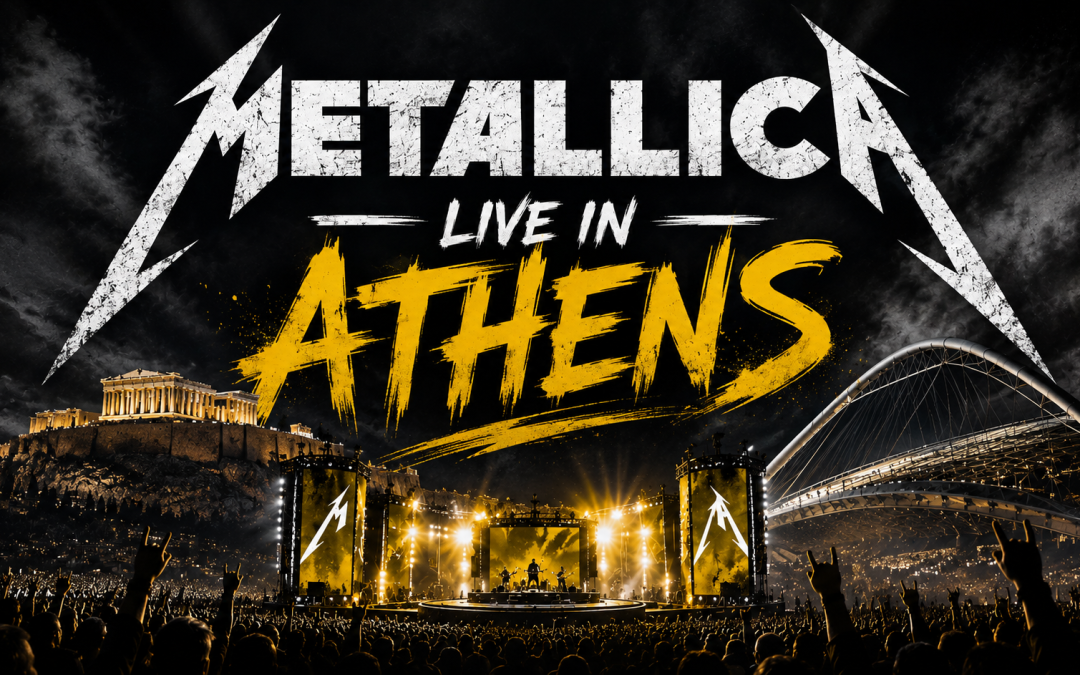
On May 9, 2026, Metallica returned to Athens for the first time in 16 years. Over 90,000 fans packed the Olympic Stadium for a 360° in-the-round show, one that will be hard to forget, and not just for the music. The night’s standout moment was one nobody had on their radar: a live rendition of Mikis Theodorakis’ “Zorba’s Dance”.
But what unfolded outside the stadium was just as remarkable. Within hours, the concert had ignited a massive public conversation across the Greek internet. How does a trend like this take hold? What drives it? And what can brands and communications teams take away from it?
We analyzed the public online conversation surrounding the concert using Brandwatch and the findings are worth unpacking.
The Numbers That Speak for Themselves
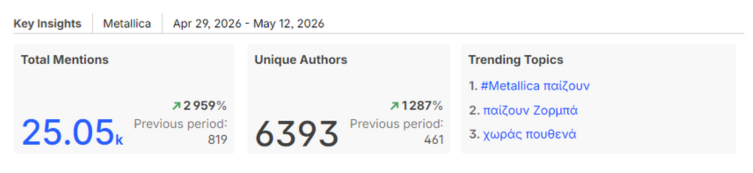
Over a 14-day period, the online conversation around Metallica in Athens generated:
- ~25,000 total mentions
- 6,373 unique authors, distinct voices who actively joined the conversation
- +2,941% increase in mentions compared to the previous equivalent period
- +1,282% increase in unique authors
This wasn’t a handful of viral posts doing the heavy lifting. Over 6,373 different users took part in the conversation, a sign of just how widely and organically it spread.
💡 Insight: A +2,941% spike in mentions isn’t just an eye-catching stat. It illustrates how dramatically the baseline conversation around a brand or event can shift before and after a major moment. For brands, that gap is the window of opportunity.
Where Did the Conversation Happen?
Not every platform plays the same role, and the data makes that clear. 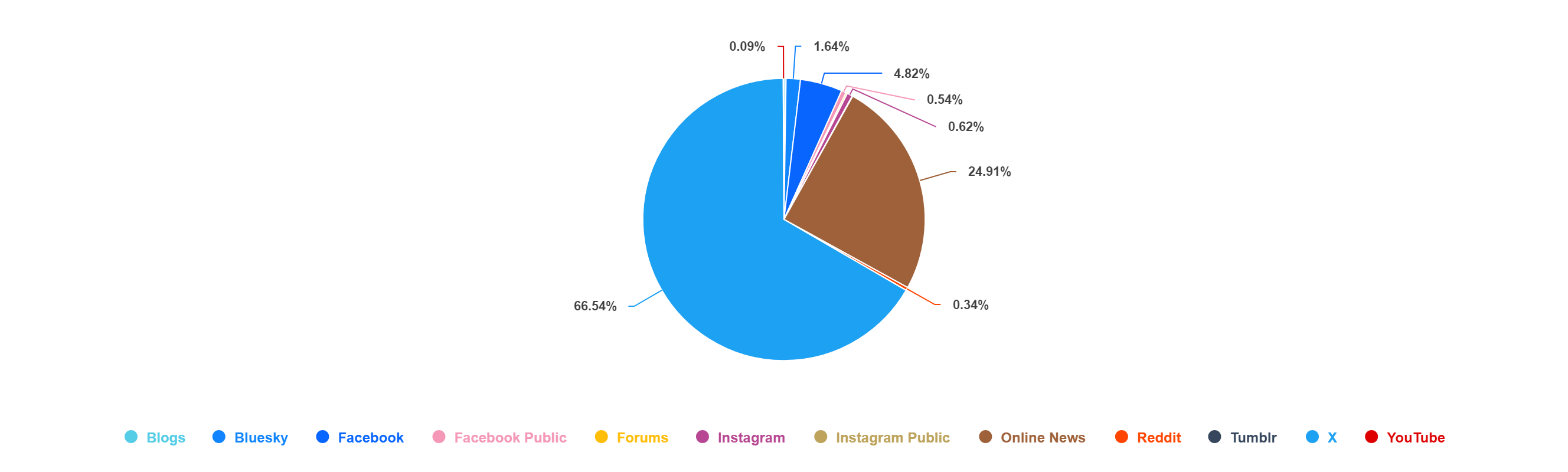 X accounted for 2 in every 3 mentions, and that’s no accident. X functions as a live reaction engine, the place where audiences comment, respond, and amplify content as events unfold. Whether it’s a concert, a sports match, or a political moment, X is almost always where the real-time conversation is happening.
Equally notable: 24.8% of mentions came from online news sources. Nearly 1 in 4 references originated from journalistic outlets, meaning the conversation didn’t stay confined to social media — it spilled over into traditional online media as well.
💡 Insight: If a brand or event has no presence on X during a live moment, it’s effectively absent from the largest share of the conversation happening around it in real time.
The timeline of the Trend
The conversation didn’t start on May 9. It had been building steadily since the beginning of the month. 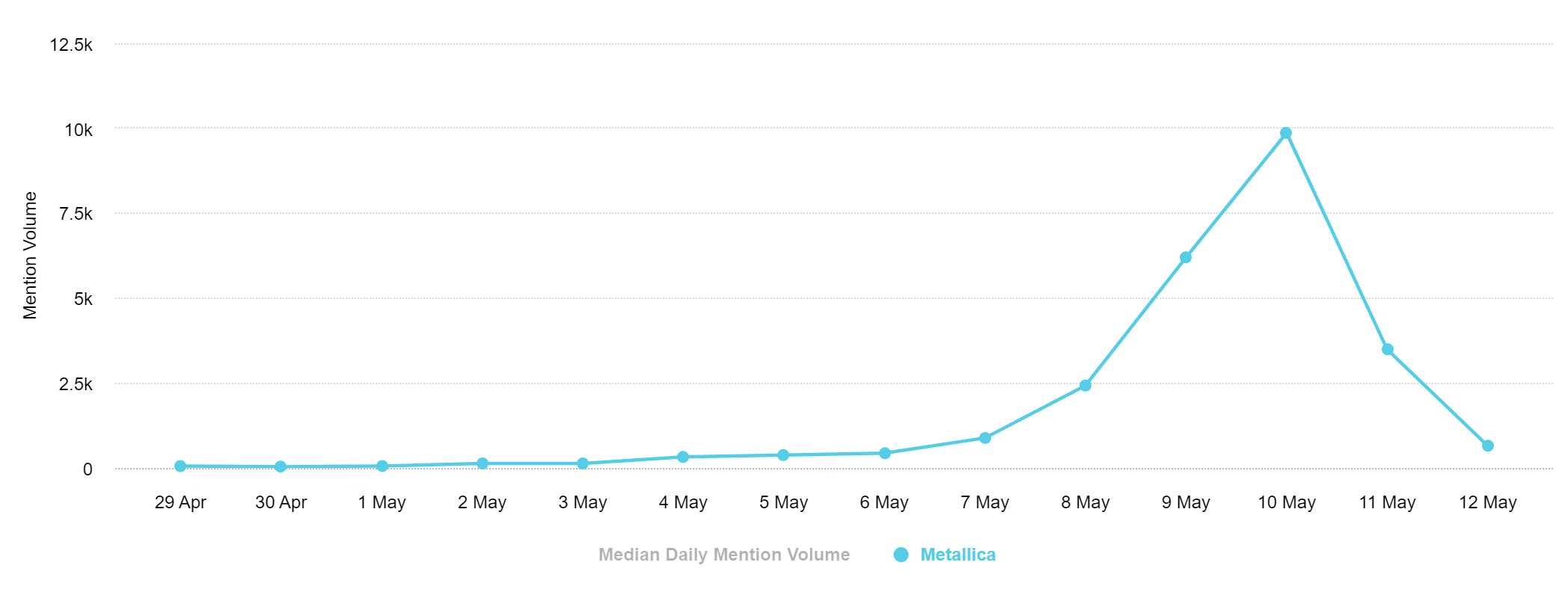
But the timeline reveals something particularly striking: the peak didn’t land on the day of the concert. It came the day after. May 10 recorded 9,864 mentions, 59% more than the day of the event itself.
The explanation is straightforward: videos, reels, reposts, and commentary kept circulating long after the crowd had left the stadium. The event was over. The conversation wasn’t.
What accelerated the trend:
- The live performance of “Zorba’s Dance”. The moment that spread most widely across social media
- Fan-shot videos from inside the stadium, which flooded X in the hours that followed
- A setlist that featured both iconic closers (“Master of Puppets” and “Enter Sandman”) made possible by the one-night-only format
- The ticket price debate, which reignited in the post-event discussion
💡 Insight: Major events don’t peak once and fade, they have an afterglow. The post-event window is often just as valuable as the day itself, and brands that recognize this can make the most of both.
What People Were Actually Talking About
The numbers tell us how many people spoke. The posts tell us what they actually said.
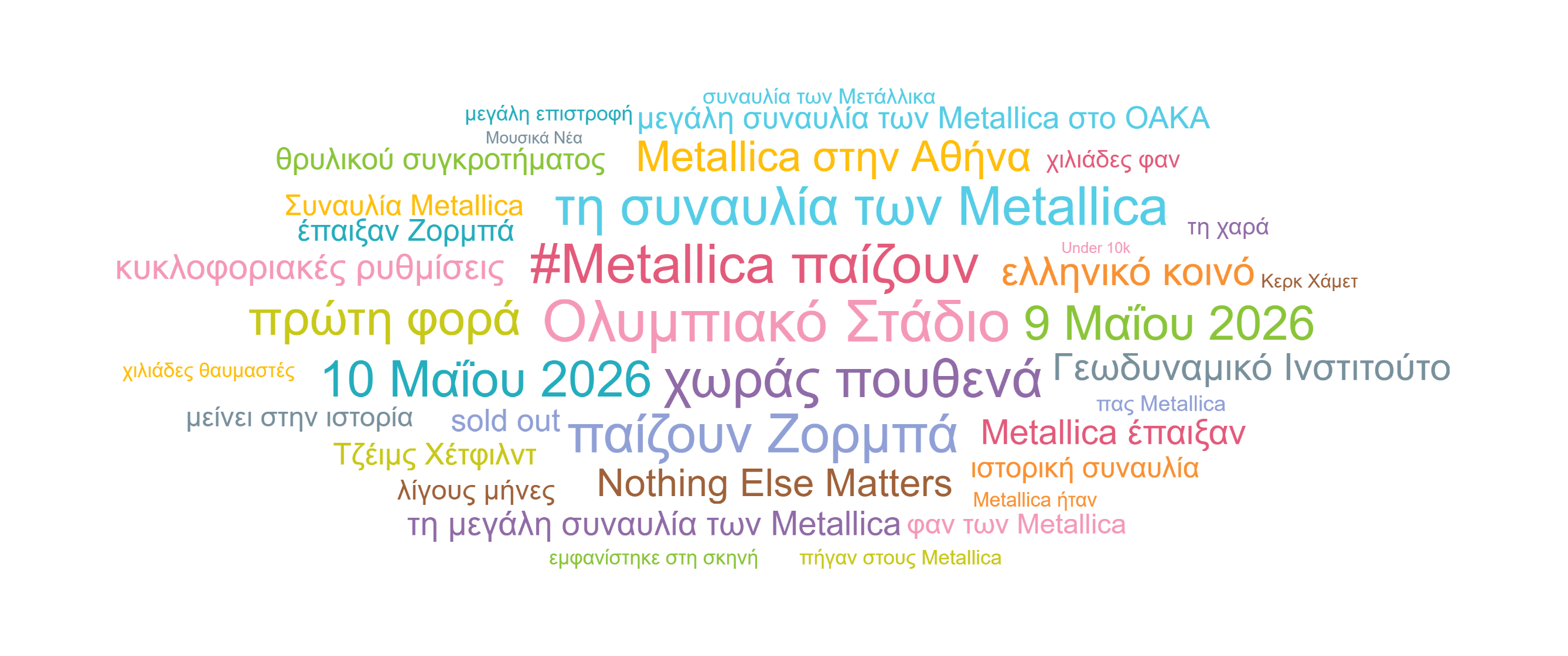 Reading through the mentions reveals that the conversation stretched well beyond the concert itself. At least five distinct themes emerged:
“Zorba’s Dance” as a viral moment
The performance by Kirk Hammett and Robert Trujillo became the night’s defining talking point. Posts described it as “epic,” “unforgettable,” “a tribute to Greece” — and it was shared widely across platforms.
The ticket price debate
One of the most persistent threads was a price comparison, with many users arguing that €150 for Metallica is “a steal” compared to what Greek artists charge. That particular post became one of the most shared of the evening.
Fandom identity and “true fan” debates
A number of users questioned whether people who attended are “real” metal fans — a dynamic that surfaces at virtually every mainstream metal event, and one that speaks to how deeply music is tied to personal identity.
Nostalgia and cultural commentary
Many posts reflected on the significance of Metallica’s return after 16 years, and what it means for Greece to be hosting events of this scale again.
Comparisons and future wishlists
Almost immediately after the show, speculation turned to which band might come next with AC/DC emerging as the clear fan favourite.
💡 Insight: A major event doesn’t generate one conversation. It generates many, running in parallel. Social listening lets you identify them, make sense of them, and if you’re a brand decide which ones you actually have something to contribute to.
When Social Media Meets Online Media | The social → media → social loop
One of the most revealing patterns from the analysis is the dynamic between social media and online media and the direction it flows.
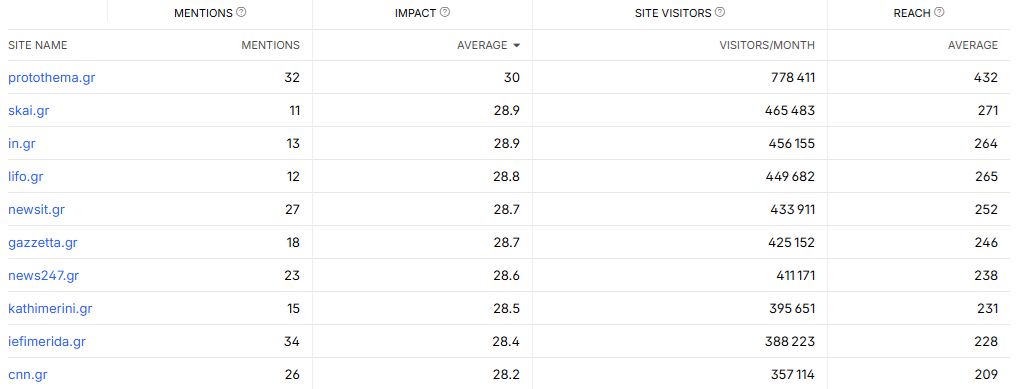 Online media didn’t create the trend. They amplified it. The community on X moved first: hashtags, videos, reposts, reactions. Online outlets then picked up the story, drawing on what was already in circulation. And that coverage fed back into social media, generating another round of shares and commentary.
One detail worth noting: gazzetta.gr, a sports-focused site, ranked among the top sources. This reflects the crossover many users drew between the concert and sporting references: stadium capacity, crowd size, comparisons to major sports events.
💡 Insight: In modern communications, social media and online media don’t operate in silos, they fuel each other in a continuous loop. A strategy that focuses on only one side is working with an incomplete picture.
Key Takeaways for Brands and Communications Teams
The Metallica concert in Athens wasn’t just a music event. It was a real-world case study in how public digital conversation forms around a major moment — and it leaves behind some clear lessons.
- Real-time monitoring matters before, during, and after.
The trend didn’t start on May 9, and it didn’t end there either. Brands and organizations that track the conversation only on the day of an event are missing critical context on both ends. - X is still where live conversation happens.
Despite the growth of other platforms, X remains the dominant space for real-time public discourse. If your audience is talking there, you need to be there too. - Unexpected moments are the ones that move people.
“Zorba’s Dance” wasn’t on the official setlist and it became the most shared moment of the night. Moments like these can’t be scripted, but they can be spotted and acted on in real time. That’s exactly what social listening is for. - Social listening isn’t just measurement, it’s understanding.
25,000 mentions tell you that people talked. What they said, why they said it, and where they said it, that’s the intelligence. And that’s what allows brands and communications teams to make decisions based on evidence, not guesswork.
In an environment where public conversations shift in real time, social listening has moved well beyond basic monitoring. It’s a tool for understanding how your brand, or any story, is perceived, how trends form, and how audiences behave.
Clip News provides social media monitoring and social listening services for brands and communications agencies, combining data and analysis to surface insights that actually matter. To find out more, fill in the form below and we’ll be in touch.
Analysis Profile
Social Listening Tool: Brandwatch
Date Range: April 29 – May 12, 2026
Sources: Social Media*, online news, blogs and more
Scope: Public online mentions and social conversations in Greek and English
Keywording/Analysis: Clip News
*The analysis draws exclusively on publicly available social media data. The search was built around the keyword “Metallica” across all possible variations, English, Greek, Greeklish, accented and unaccented, along with relevant hashtags (e.g. #Metallica, #MetallicaAthens, #M72WorldTour).
Search Limitations: Brandwatch collects data from websites, blogs, forums, and social media platforms (X, Facebook, Instagram, Reddit, Tumblr, etc.), subject to each platform’s own restrictions. Conversations in closed forums, private Facebook groups, or Instagram Stories, for example, are not captured. This analysis should be read as an indicative snapshot; different source selections or time ranges may produce different results.
New Capabilities in International Media Coverage
Clip News S.A. has been providing its subscribers with news digest services from around the world for over 20 years.
Now, through its partnership with MT Connect, Clip News subscribers gain access to a global marketplace of over 140 markets, allowing them to quickly and cost-effectively find the information they need from print media in every corner of the globe.
What this means for you:
• Identify trends in the press in new markets
• Monitor your competition across borders
• Manage your reputation on a global level
• Receive faster and more actionable insights from around the world
About MT Connect
MT Connect is a global platform for the media intelligence industry that facilitates and accelerates the delivery of international media content.
Looking Ahead
MT Connect and Clip News are committed to expanding their coverage and integrating additional media sources in the future. This partnership reflects a shared vision: building a connected media intelligence ecosystem based on trust and collaboration.
Strategy Optimization and Reputation Management
International media monitoring is not just a monitoring service, but a strategic tool. Through global media monitoring, you can enhance your company’s reputation, improve marketing strategies, and identify critical opportunities. Clip News provides all the information you need to meet challenges and remain competitive in a global market.
Stay informed both domestically and internationally by receiving accurate, immediate, and relevant information from the countries that interest you!
Contact us to learn more about the international news monitoring services provided by Clip News!

For many years, competitor monitoring relied on limited sources of information: advertising campaigns, press releases, corporate announcements, or media coverage. Today, however, a large part of business strategy unfolds publicly on Social Media. Corporate accounts on Facebook, Instagram, TikTok, LinkedIn, X, or YouTube no longer function solely as promotion channels. They also serve as a window into companies’ communication and marketing strategies.
Social Media as a source of strategic intelligence
Each post on Social Media conveys information about how a company chooses to communicate with its audience. Through the systematic monitoring of corporate accounts within an industry, valuable insights can emerge, such as:
- which campaigns are currently running
- which products or services are being promoted more intensively
- which collaborations with influencers are activated
- which types of content generate higher engagement
- which trends are beginning to shape the market
In other words, Social Media has become one of the most direct ways to understand the dynamics of an industry.
When information becomes a competitive advantage
For marketing and communication teams, monitoring Social Media activity goes beyond simple awareness. It becomes a strategic analysis tool. The systematic recording and analysis of corporate account activity enables businesses to:
- identify trends before they become widely visible
- evaluate the effectiveness of specific content formats
- better understand competitors’ communication strategies
- identify opportunities to differentiate their own campaigns
In an environment where developments move quickly, timely information can provide a significant advantage in decision-making.
From fragmented monitoring to systematic analysis
Many businesses monitor competitor accounts occasionally. However, fragmented observation rarely leads to meaningful conclusions. Systematic monitoring of specific pages on Social Media enables structured content tracking, analysis of posting frequency, and evaluation of audience engagement. This process helps businesses gain a more comprehensive view of the market’s communication strategy.
The importance of Social Media Page Monitoring
In this context, Social Media Page Monitoring emerges as a key tool for businesses and organizations that want to maintain continuous visibility over industry activity. Monitoring corporate accounts, influencer pages, and other important Social Media accounts enables the timely tracking of market movements and a deeper understanding of competitors’ strategies. Clip News provides Social Media Page Monitoring services that enable structured monitoring of key Social Media accounts, offering businesses a more comprehensive view of developments within their industry.
Is your business ready for the next step?
In today’s digital environment, a significant portion of business activity takes place publicly. Campaigns, partnerships, and communication strategies are reflected daily on Social Media. The question is not whether this information exists. The question is whether businesses have the tools to systematically monitor it.
Contact us through the form below and take advantage of the Social Media (Keyword and Page) Monitoring offer, gaining 2 months free of charge on an annual subscription for monitoring all Social Media channels (Facebook, Instagram, LinkedIn, TikTok, X, YouTube)!
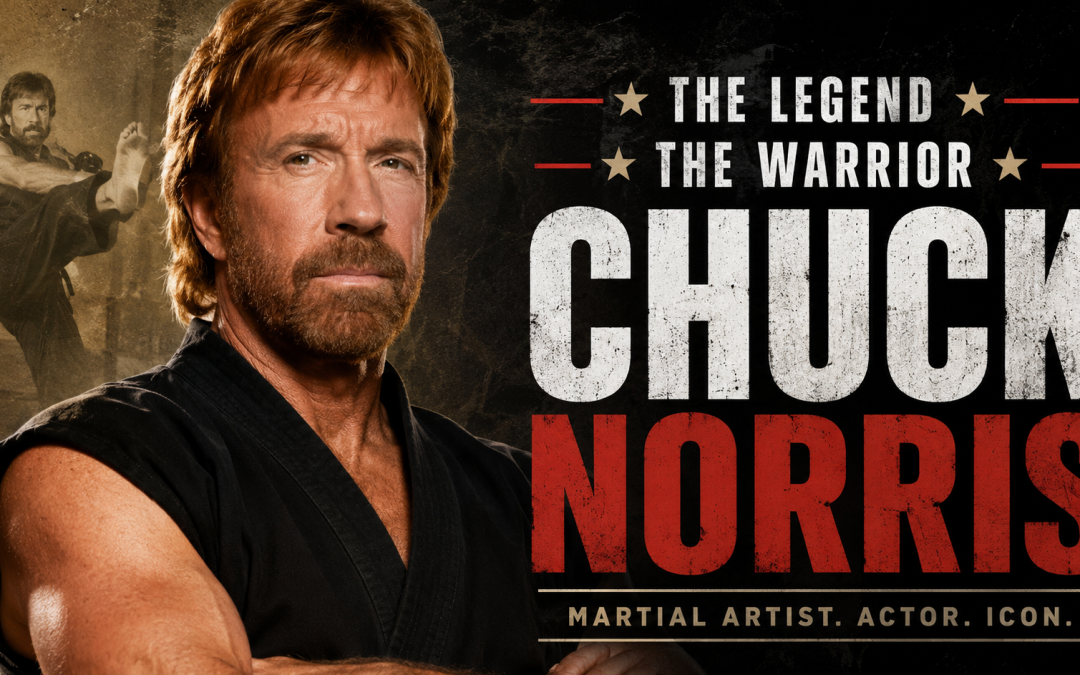
Chuck Norris, the iconic action film actor whose name became synonymous with ‘superpower’ and the invincible ‘tough guy’ persona, passed away at the age of 86 on March 19, 2026. At Clip News, we sought to analyze the publicity and mentions surrounding this event. Chuck Norris was not only known as an action film star and the lead of the television series ‘Walker, Texas Ranger’, but he also represented one of the most distinctive phenomena of early internet culture: memes that portrayed him as an almost superhuman figure.
When the death of a celebrity is announced, the expected reaction is usually clear: tributes and a ‘serious’ online discussion. However, the picture here was not one-dimensional. The analysis of the online conversation in Greece shows that, despite the intense publicity and emotional charge, meme culture did not disappear. Additionally, there were several mentions (both positive and negative) regarding the popular actor’s political stances.

From March 17 to March 27, 2026, we analyzed more than 8,000 mentions (articles, posts, and social media comments) regarding the death of Chuck Norris in Greece, based exclusively on data from the Brandwatch platform, a global leader in social listening. Our goal: To understand how the publicity surrounding Chuck Norris’s death was reflected and how such an event is transformed into humorous content on Social Media.
Rapid Surge in Conversations
The news of Chuck Norris’s death immediately triggered a wave of intense online activity in Greece. Within a few hours, the discussion skyrocketed, exceeding 8,000 mentions, with a particularly sharp peak recorded in just 24 hours. The +6000% increase clearly reflects the speed with which the online audience activates in response to a high-recognition event. The interesting element is not just the volume, but also the immediacy: public discourse is shaped almost in real-time, with Social Media functioning as the primary mechanism for the dissemination and reproduction of information.

Mention Volume by Source
The news originated from the Media, but the actual spread and evolution of the conversation took place on Social Media — and primarily on X. The vast majority of mentions came from X (Twitter), which accounted for approximately 70.86% of the total volume. This element confirms the platform’s role as the fundamental space for immediate reaction, commentary, and real-time content reproduction. Online news sites followed with a share of approximately 14.04%, acting as the primary carriers for broadcasting the news and shaping the initial information. Subsequently, Facebook gathered about 9.45% of the mentions. Other sources showed significantly lower percentages.

Word Cloud Insights
The word cloud clearly captures the dominant tone of the conversation surrounding Chuck Norris. 
- At the center are phrases such as ‘Chuck Norris died’, ‘passed away’, and ‘heavy heart’. This confirms that the primary narrative of the publicity was intensely emotional and aligned with the logic of the news and the final farewell.
- At the same time, references related to his career and identity appear: ‘Texas Ranger’, ‘martial arts’, and mentions of other iconic figures (e.g., Bruce Lee). This shows that the audience did not limit itself to the event of his death but also brought back his legacy..
- Finally, the presence of emojis and lighter expressions within the cloud indicates that, even within a charged context, there was room for a more informal or humorous approach.
Overall, the word cloud confirms the core insight of the analysis: the conversation was dominated by the gravity of the news, but it was not one-dimensional
The internet reacted with gravity… but never stopped using humor.
Most Reposted Content (X)
The analysis of the most reposted content on X (Twitter) for the period of March 17–27, 2026, clearly highlights which types of content gained the most traction regarding Chuck Norris. The posts with the highest reach were not limited to a simple reproduction of the news; instead, they primarily revolved around the myth and the meme culture that accompanies his name.

Top Performing Content
Humor and the reproduction of the ‘legend’ served as the primary engagement drivers
- On March 21, a viral post challenged Chuck Norris’s status as the “GOAT” (Greatest of All Time), garnering the highest estimated reach (~13.6K).
- On March 25, humorous content based on the well-known meme pattern reached ~12.8K in reach.
- Similar posts utilized the same motif: ‘He will deliver his own funeral oration,’ ‘He died yesterday, but today he feels better,’ or ‘He is alive in the next world as well.’
Secondary Pattern: Politicized Mentions
In parallel, a smaller but distinct set of mentions moving within a different context was identified. Specifically, some users connected Chuck Norris with political figures, geopolitical issues, and ideological stances (e.g., Israel, Netanyahu, Zionism). While these mentions did not dominate the conversation, they demonstrate how a pop culture event can be integrated into broader narratives.
Although the news of his death was the trigger for the discussion, the spread of content was primarily amplified by posts that:
- Repurposed well-known meme formats
- Maintained his ‘superhuman’ persona.
- Transformed the event into a humorous narrative.
This confirms that on Social Media, reach is not determined solely by the information itself, but by how ‘shareable’ the content is.
Why Social Listening Matters
The case of Chuck Norris demonstrates that public discourse is never monolithic. Within a few hours, the same event becomes news in the Media, transforms into humor on Social Media, and acquires different meanings depending on the audience.
If you only monitor news media, you see the event. If you only monitor Social Media, you see the reaction. Only by combining them can you understand the full context. Otherwise, you lose touch with how the audience actually speaks.
Information alone is not enough. What truly matters is understanding how the conversation surrounding it evolves. In an environment where information spreads instantly, the audience generates its own content, and narratives shift rapidly, social listening is not just a monitoring tool—it is a tool for understanding the real picture.
Analysis Identity
Social Listening Tool: Brandwatch
Date Range: 17.03.26 – 27.03.26
Sources: Social Media*, websites, blogs
Keywording/Analysis: Clip News
*The analysis is based exclusively on available public data from social media channels in Greece.
Search Limitations: The Brandwatch platform collects data from websites, blogs, forums, and social media (X, Facebook, Instagram, Reddit, Tumblr, etc.) according to the restrictions set by each medium. For example, discussions in closed forums, private Facebook groups, or Instagram Stories are not collected. The above analysis represents an indicative approach, considering that variations in sources and timeframes may produce a different overall picture.
There is a common myth in the business world: “Since our company doesn’t have an official channel on TikTok (or any other Social Media channel), we don’t need to know what’s happening there.”
In reality, this approach is like sitting in a room with your ears covered while everyone in the next room is talking about you. Whether you choose to have an owned presence (your own corporate accounts) on Social Media is a strategic marketing decision. Whether the public chooses to talk about you, however, is a reality you cannot control – you can only monitor it.
The Illusion of Absence
Your absence from a platform does not imply the absence of your brand from user discussions. Today’s consumers generate content (UGC) incessantly. A review of your product, an experience at your store, or even a complaint can go viral on TikTok or Instagram within hours.
If you don’t perform monitoring, you risk finding out about a crisis that started on Social Media only after it has reached proportions that are difficult to reverse. Monitoring is not just “measurement”; it is an early warning system.
How Clip News Illuminates the “Blind Spots”
At Clip News, we help companies understand that Social Media Monitoring isn’t just about their own posts. Our service is divided into two main pillars that cover every information need:
Social Media Keyword Monitoring: Here, the focus is on your brand and the keywords that concern you. We detect mentions across the entire Social Media spectrum, identifying what users are saying about you, even if they don’t tag you. It is the only way to hear the “voice of the customer” where it is expressed spontaneously.
Social Media Page Monitoring: Strategy isn’t just about you; it’s also about your environment. Through this service, we monitor the activity of competitors, partners, or influencers. What feedback is your competitor receiving? What trends are industry influencers highlighting? This information is “gold” for your next strategic move.
Silence is Not Always “Golden”
Not knowing what is being said about your company on channels like TikTok, X (Twitter), or Instagram leaves you exposed. Social Media Monitoring gives you the information advantage, allowing you to:
- Prevent communication crises before they escalate.
- Identify opportunities for product improvement through user feedback and needs.
- Understand the market sentiment and competitor moves in real-time.
Opening an account on a new platform is optional. However, knowing what is happening there is essential to protect and grow your brand.
Contact us through the form below and take advantage of the Social Media (Keyword and Page) Monitoring offer, gaining 2 months free of charge on an annual subscription for monitoring all Social Media channels (Facebook, Instagram, LinkedIn, TikTok, X, YouTube)!
 Portal Login

