Listening to the Audience
In today’s whirlwind of social media, brand perception can change within minutes, and the ability to “listen” to the audience in real time is invaluable. Every comment on social media is a piece of valuable information, as it can shape perceptions, emotions, and behaviors.
This is where Social Media Monitoring comes in. It’s the first step to gaining an immediate understanding of how the public perceives a brand. Through specialized tools, such as the Clip News Portal and Brandwatch, PR and Marketing experts can track what people are saying on social media about brands and competitors, identify growth opportunities, or avoid publicity crises.
From Monitoring to Listening
Social Media Monitoring is the collection of posts from social media channels, such as LinkedIn, X, Facebook, Instagram, TikTok, YouTube, through the search of specific keywords in dedicated platforms. This process is not limited to owned posts but extends across the entire spectrum of social media.
However, the power of knowledge does not have to stop at monitoring (or tracking). Social Listening goes beyond data; it analyzes the context of the discussion, the social media channels, top users, sentiment, trending topics, and more. It is the tool that enables communication teams to understand:
- How the audience reacts to a campaign
- How reputation evolves over time
- Which influencers align with the brand’s values
- Which influencers align with the brand’s values
SoMe & Influencer Marketing Conference
At the “Social Media & Influencer Marketing Conference 2025” organized by BOUSSIAS at OTEAcademy, Clip News Vice President of Media Intelligence, Katerina Kechagia, highlighted the capabilities of Social Media Monitoring and Social Listening through real case studies.
- In a campaign with over 2M impressions, sentiment analysis showed that most posts were sarcastic.
- During the recent publicity crisis of Pizza Fan, social media posts skyrocketed to 8,434 within just a few hours.
- The well-known Pepsi x Kendall Jenner campaign was considered superficial by the public despite the influencer’s millions of followers, leading the company to withdraw it.
Numbers, in order to gain real meaning, need to be combined with qualitative evaluation and turned into insights derived from public opinion. Because, as Ms. Kechagia characteristically stated, “Your brand is not what you say it is. It is what others say about it when you’re not in the room”.
Why It Matters Today
In an ever-changing communication environment, Social Media Monitoring and Social Listening offer:
- Real–time alerting for immediate crisis management
- Benchmarking against competitors
- Sentiment analysis and audience understanding
- Data–driven insights for strategic planning
The future of communication belongs to brands that truly “listen” to the audience, leveraging real-time monitoring solutions and analyzing social media discussions. Turning these into actionable insights results in deeper audience connection and more targeted campaigns.
The article was published on Daily Fax on October 21, 2025.

Whether you know it or not, your brand is already the subject of online discussions – in editorials, online forums, social media posts and comments. Especially on social media, consumers express opinions, feelings and experiences that directly affect the reputation and image of your business. With 5.2 billion social media users worldwide, who represent 64.7% of the population, the need for strategic Social Listening has never been greater. In Greece, the 7.32 million active users (73.5% of the population) spend daily more than 2 hours on social media, creating priceless information for brands that need to know about it in order to be able to use it for their benefit.
The difference between Social Media Monitoring and Social Listening
Before we look into the potential of Social Listening, it is important to understand how it differs from Social Media Monitoring. While the two terms are often used as synonyms, in reality they serve different purposes and operate on different levels and in different depths. Let us summarize their main differences:
Social Media Monitoring is the first line of defense, when it comes to business publicity monitoring. It records references and comments about your brand, your competitors and your sector, in real time. It mainly “fishes”, collects and stores publicity data from social media and is destined for short-term problem settlement.
The main purposes of Social Media Monitoring are the management of the reputation of your brand and customer service, with alerts for every reference. It is a necessary tool for the management of crises and for maintaining active communication with your audience. It can be manual or automated, focused on alerts. It is usually based on key tools of media monitoring platforms or dashboards.
Social Media Monitoring has a rather reactive character. Companies respond to what is being said about them, the very moment something happens. Social Media Monitoring collects references, without particularly dwelling on the broader framework. The purpose is to inform you about what is being said and where, in order to be able to intervene, if need be.
Social Listening is not just about monitoring what is being said about your brand, your competition or your sector. It analyses social media discussions, in order to understand trends, feelings and opinions about your brand, your sector or your competitors.
Social Listening dwells more on data, using tools and analytics to interpret sentiment (positive, neutral, negative), locate the causes of trends and analyze the broader framework of the discussions. It allows brands to understand many of the motives behind discussions, locate opportunities and make marketing, product development and PR decisions, based on actual data.
It usually requires more advanced, automated tools, that can collect and analyze data from many sources. Such tools usually allow for automatic sentiment analysis, the detection of topics that stand out, the location of important users mentioning your brand, KPIs (such as Impact or Reach) and automatic summaries of the key points of the references. However, the composition, the in-depth analysis and the extraction of useful conclusions are still made by analysts, the so-called “media analysts”. The combination of contemporary tools and human expertise reduces the time that thousands of publicity data would need to get processed and highlights useful information about the brands.
Social Listening is a more proactive approach. Companies are trying to understand the reason things are being said about them and predict needs or issues before they evolve, using insights to decide their next moves. It focuses on the long-term health of your brand, the evaluation of campaigns and future strategic plans.
While Social Media Monitoring responds to “what is happening now” and has a reactive character, Social Listening focuses on “what this means for the future” and constitutes a more proactive approach. The two approaches naturally complement each other and are necessary for an integrated social media presence strategy for any brand.
The hidden opportunities that Social Listening reveals
Many of the most valuable opportunities for a brand are hiding in spontaneous consumer discussions, comments, complaints, hashtags, etc. Social Listening operates as a “radar” that tracks discussions and turns them into strategic knowledge:
1. Emerging customer needs and opportunities
With the average user visiting 6.83 different platforms monthly, opportunities for the tracking of different useful insights multiply. Language and context analyses in discussions reveal consumer needs that are not being met, unexpected product uses and pain points that traditional market research methods would eventually highlight, but not immediately.
Many successful brands have discovered new consumer behaviors through Social Listening, which led to the development of new products or to the readjustment of their marketing strategy.
Case Studies:
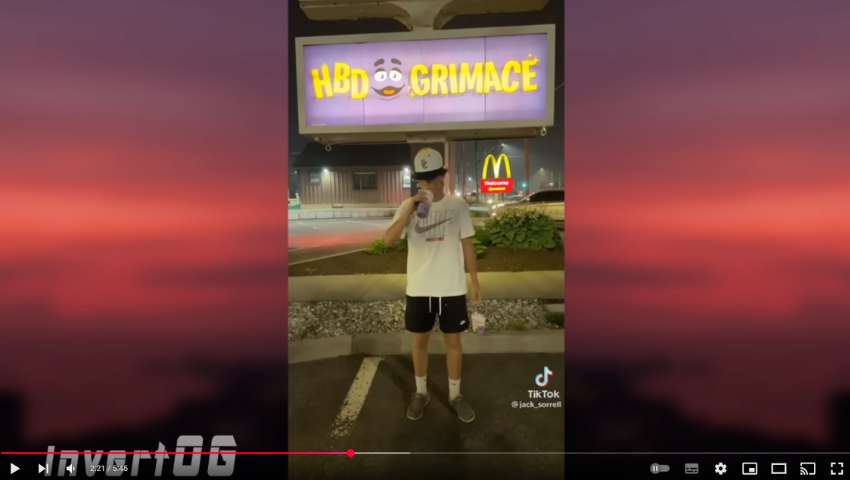
A known case study is “Grimace Shake”, a berry-flavored milkshake of McDonald’s. In 2023, the company launched the product and, all of a sudden, a TikTok trend went viral, showing users that tried the milkshake and ended up starring in “horror scenes. Through Social Listening, the company located the trend, analyzed the positive and funny sentiment and decided to include it in its strategy, instead of ignoring it. The company took part in the discussion and increased its brand engagement, especially with Gen Z. As a result, sales went up and the entire issue had a positive impact on the company’s quarterly financial results.
Another case study is “Lucifer” TV show. When FOX cancelled the show, fans launched a huge social media campaign with the #SaveLucifer hashtag. Through Social Listening, Netflix located the volume of relevant references and the extent of the discussion, analyzed the positive sentiment of users and decided to buy the show. As a result, Lucifer became one of the most popular shows on the platform, proving that properly reading of social media discussions can lead to smart strategic decisions.

2. Competitive intelligence for strategic advantage
Social Listening is not just about your brand, it is also about how consumers talk about your competitors. Through the monitoring of references, comments and reactions for other companies of your sector, you get a precious competitive advantage:
- Location of market gaps: If users are expressing discontent and non-fulfilled needs for the products of other companies, such information can lead you to new development opportunities. For example, if you often see complaints about a competitor’s after-sales service, you can invest in a better customer care service and advertise it strategically.
- Analysis of competition successes and failures: By monitoring which campaign “skyrocketed”, or which campaign caused a negative backlash, you can understand what works in your market and what does not, without having to be the first to try it out.
- Discovery of new audiences-targets: Through posts and comments about other brands, you can locate consumer groups that you had not located up to now, but correspond to similar products or values.
- Prediction of competitor moves: If you see a sudden increase in positive comments or a buzz regarding a competitor, they are most likely preparing a product launch, a new campaign or rebranding. Timely monitoring allows you to prepare accordingly or react dynamically.
3. Detection of brand advocates and micro-influencers
In times when 87.3% of the adults worldwide use social media, discovering unsolicited influencers is crucial for success. Social Listening locates consumers who recommend your products spontaneously, without an agreement with your business.
Such supporters are gold for your brand. Strengthening such authentic “voices” on social media can increase the popularity of your brand and create trust through authentic word-of-mouth marketing.
The effectiveness of brand advocates lies with their credibility. As opposed to traditional influencers, who have hundreds of thousands of followers, micro-influencers and brand advocates are often part of smaller, but more engaged communities. The authenticity of their recommendations offsets their smaller reach, as their audiences tend to trust them more.
Moreover, Social Listening allows you to locate, not only people who talk positively about your brand, but also the reasons why they are doing so, the specific aspects of the products they glorify and the feelings they associate with a brand. Such information allows companies to develop more targeted strategies for the cultivation and maintenance of such relationships.
4. Data-driven marketing optimization for better results
With social media users in Greece spending 2 hours and 21 minutes daily on social media, opportunities for engagement are limitless. Social Listening allows you to understand how the sentiment about a topic evolves over time and prevent a negative publicity crisis, before it spreads to other channels.
Real-time Social Listening insights from all available social media channels allow you to trace trending topics, adjust your message and dynamically optimize your campaign. That is particularly important, when we know that users visit multiple platforms and their preferences evolve rapidly. Besides, social media do not operate as silos on a communication level, but they are inseparable. For example, a YouTube advertisement with many views can “transfer” to other channels very quickly, giving users the opportunity to discuss and comment on the topic, positively or negatively.
Case Studies:
A relevant case study is the Pantene campaign under the title #HairHasNoGender, which brought to the spotlight 5 queer persons, members of the Greek LGBTQ+ community. The YouTube video went viral and the discussion quickly passed to Facebook and X, with hundreds of users positively or negatively commenting on the content and the purpose of the advertisement.

Another similar case study from the Greek market is the “Whatever you want to be” campaign of AB Vassilopoulos supermarkets. On occasion of International Father’s Day, the father starring in the campaign let his daughter put makeup on him and cover his hair with colorful hairpins, which caused a long discussion on social media.

In order for the success of a campaign to be measured, one needs to be able to measure its popularity in all the channels that the campaign appeared on. The above examples are proof that an advertising campaign is not limited to the initial media it appeared on, but creates a network of discussions that expands horizontally to the digital ecosystem.
The value of Social Listening lies precisely with its ability to grasp the level of cross-platform spreading. Measuring the views of the initial video or comments below it, is not enough. We also need to monitor how the message transforms, how t is interpreted and reproduced in different channels.
Moreover, real-time insights allow companies to directly react to the developments. When a campaign causes strong reactions, positive or negative, one’s ability to adjust their strategy in real time can make a difference between failure and success. That means that Social Listening is not just a measurement tool. It complements Social Media Monitoring as a strategic adjustment tool that allows the flexible management of your communication strategy, depending on the way public discussion evolves.
The Greek digital landscape: Opportunities and trends
Greece has an interesting digital landscape for Social Listening. With 6.59 million adult users (76.6% of the active population) active on social media, brands have access to a large audience.
Popular platforms in Greece:
- Facebook: holds a lion’s share of 85.73%, in spite of the fact that its active use has slightly reduced
- Instagram: 4.25 million users
- X: the known former Twitter
- YouTube: top video platform with 7.4 million accounts
- TikTok: the platform with the fastest growth, with 40% of the population in Greece updating its account on a monthly basis
- LinkedIn: with 2.8 million users, the most popular platform for professionals aged 25-55 years old.
Practical tips for effective Social Listening
Knowing the power of Social Listening is the first step. The next step is to use it to your advantage. With the right practices, tools and targets, you can turn the vast volume of online discussions into actually useful business actions. The next section lists simple and substantial steps towards starting or improving your strategy:
1. Setting strategic targets and KPIs
Successful Social Listening begins with clear and quantifiable targets. Instead of general pursuits, such as “improving your reputation”, you need to set specific targets that take into account qualitative elements, such as “increasing positive sentiment by 15% in 6 months” or “reducing the time of response to social media customer complaints by 40% in a year”.
Basic KPIs you need to monitor include brand sentiment evolution, Share of Voice compared to competitors, source significance (Impact, Reach), the speed of response to feedback, and the ROI of campaigns based on Social Listening insights.
2. Selection of tools and approach
In Clip News, we believe in combining the experience of our expert analysts with the potential of advanced technology. Automated tools may be able to process large volumes of data, but expert analysts offer context and are able to understand small differences in meaning that Natural Language Processing (NLP) or AI algorithms cannot.
Such “hybrid” approach proves particularly useful in the Greek online environment, where cultural references, the particularities of the Greek language and local expressions require a deep understanding of the social and cultural framework. While AI tools can locate keywords and basic sentiment patterns, they often miss important details, such as Greek irony, local dialects, cultural innuendos or references to Greek memes and viral content. Our experienced analysts recognize such elements and can interpret, not only what users say, but also why they say it, what they really mean and what is the broader impact on the brand on a local market level.
3. Integration in business strategy
Data collected from Social Listening need to be strategically allocated across the organisation structure of your business. Therefore, a data democratization system needs to be developed, in order for each department to be able to access the information they need, in the form they need it. Create a single ecosystem of information that supplies your marketing and sales’ departments, your customer service department and the R&D department.
Each department needs adjusted insights that meet its needs and targets. For example, the communication department needs real-time alerts to locate negative references to the brand, in order to effectively deal with a situation as quickly as possible. On the other hand, the R&D department needs analyses of data collected over a significant time period (e.g., quarter) regarding the unfulfilled needs of consumers, in order to schedule improvements in products or services.
Trends for 2025 and the future
Social Listening evolves constantly, going hand-in-hand with technological and social changes. Businesses are called to adjust to consumers moving to new platforms and demanding more customized experiences. In the following section, we are looking into the main trends that shape the future of Social Listening:
- Technological developments that shape the landscape:
AI and Natural Language Processing are constantly improving in terms of understanding sarcasm, irony and the cultural context of discussions, while they speed up the processing of larger publicity data volumes. Constantly improving the real-time updating of social media data facilitates the quicker location of useful conclusions, while predictive analytics allow you to predict trends before they become mainstream.
- Emerging strategic priorities:
An increasing number of top businesses worldwide are adopting proactive approaches. By analysing unusual peaks in the volume (buzz) of social media references or the abrupt increase of the number of negative references (sentiment), businesses manage to locate irregularities in discussion data, as well as emerging trends, months before they become mainstream.
At the same time, they invest in the development of complex performance models that connect Social Listening insights to quantifiable business results. The new generation of businesses combines Social Listening data with CRM, sales information, marketing KPIs, market research and consumer behavior analyses, creating a 360° customer profile that allows for super-customized experiences, often in real time. Such a holistic approach turns every contact with customers into an opportunity for a deeper connection and long-term devotion.
- Compliance and responsible use of data:
As data privacy regulations are becoming stricter, transparency in the use of data becomes crucial. For that reason, Media Monitoring and Social Listening platforms are “fishing” data from social media, always based on the restrictions set by every channel. “Ethical listening”, which respects user privacy and complies with EU’s GDPR, are main requirements for every Social Listening strategy.
Social Listening as a competitive advantage
With 5.2 billion social media users worldwide, the need for strategic Social Listening has never been greater for brands. Social Listening reveals opportunities hiding in the chaos of public discussions. Companies that invest in such “consumer intelligence tools” add to their weaponry a strategic advantage that allows them to innovate and protect their reputation more effectively.
In Clip News, we combine cutting-edge technology with the expertise of our analysts, in order to offer Social Listening solutions that turn data into useful information. In a constantly-evolving digital world, Social Listening is a necessary tool for every brand that wants to remain competitive.

How did an Adidas drone show near the Acropolis of Athens cause thousands of reactions in only a couple of hours? Clip News’ team uses the Brandwatch platform to present a digital listening analysis. From top hashtags to total sentiment, the following case study shows how new-generation monitoring is turned into a communication strategy tool.
Public outcry for the Drone Show
The recent Adidas drone show that took place at Zappeion Hall caused public outcry. The spectacular show, which included the hologram of a huge Adidas shoe with the Acropolis monument in the background, raised serious questions about whether commercial advertisements near historical locations are proper.
Politicians and supporters of Greece’s cultural heritage denounced the Adidas drone show as a blatant commercialization of the Greek cultural identity. At the same time, reactions flooded social media. Some users mocked the situation, while other expressed serious concerns over the impact of Acropolis’ commercial exploitation. The dispute led to an investigation by the Athens First Instance Prosecutor’s Office and to lawsuits by the Greek Ministry of Culture against any other person liable. On their side, the organizers of the event claim that all legal procedures were followed.
Key Takeaways
Clip News analysts studied 13,090 publicity references from Websites, Blogs and various Social Media channels over the period 15-19 May 2025. Public discussion focused on the commercialization of cultural heritage, with 4,994 unique authors expressing intense opinions, from condemnation to humorous comments.
The trending topics include phrases like “Adidas over the Acropolis” and “Adidas ad at Acropolis”. Online news was dominated by the statements of the Greek Minister of Culture, Lina Mendoni, and articles of cultural and political content..
Volume over Time
Publicity skyrocketed on 16 May 2025, one day after the drone show. Volume exceeded 600 references per hour and buzz stayed quite high until 18 May, proof of the intensity and duration of the reaction in the digital environment.
Keywords, Hashtags & Emojis
The word cloud flooded with phrases like “lawsuits against any other person liable”, “prosecutor intervention”, “explanations in writing”, “Adidas shoe”. Top hashtags were #adidas, #acropolis και #mendoni. The emojis used were of particular interest. The dominant one was 🤡, suggesting irony, criticism and the surge of user emotions.
Media Sources
Out of the publicity sources selected for analysis, 76% of references came from X (formerly Twitter), 21% came from news websites, 2% from Facebook, 1% from Reddit and less than 1% from blogs. As far as the X references are concerned, 55% of the users were men and 45% of the users were women, a sign of broad demographic participation in the discussion.
Sentiment Analysis
Some 48% of the references were negative and 52% of the references were neutral. No positive references were recorded, which proves that the entire situation mostly raised concerns.

Top Sites and Top X Posters
The websites with the biggest influence, based on the Impact* index, were “protothema.gr”, “iefimerida.gr”, “news247.gr”. In terms of X accounts, “grok” and “skaigr”, as well as journalists “NChatzinikolaou” and “KostasVaxevanis”, had the biggest impact, based on their numbers of followers. *Impact: It is a metric the potential impact of an author, site or mention. It is a logarithmic scale between 0-100 and depicts how “important” something is.
Why Digital Listening matters
The Adidas Drone Show case highlights the importance of digital listening and real-time monitoring. Through advanced social media monitoring and internet monitoring tools, like Brandwatch, brands from every sector, culture and communication officials in this particular case, are able to:
- locate trends and crises at their onset
- analyze sentiment (positive, neutral, negative) and the origin of the discussion
- evaluate data for strategic reactions and repositioning.
For organizations that handle reputation or brand image issues, real-time media monitoring and the analysis of publicity data from different sources are necessary tools in contemporary communication strategy.
Analysis identity
Digital Listening Tool: Brandwatch
Date Range: 15-19/05/2025
Sources: websites, blogs, forums, social media (subject to the limitations of each channel)
Keywording/Analysis: Clip News
Search Restrictions
The Brandwatch platform collects data from websites, blogs, forums, social media (X, Facebook, Reddit, Tumblr, etc.) with the restrictions defined by each channel. For example, discussions in closed forums or Facebook private groups are not collected.
The above analysis provides an indicative approach, taking into account that varying the publicity data sample and time range may produce different insights.

LinkedIn Monitoring: How Greek Banks Can Win the LinkedIn Game With the Aid of Reliable Data
At a glance
LinkedIn constitutes a crucial communication strategy tool for banks. AMEC award-winner Clip News offers specialised LinkedIn Monitoring solutions, aiming at strengthening reputation, optimizing strategy and understanding competition, by using real-time data from the Clip News Portal platform.
Objectives
- Real-time LinkedIn Monitoring & communication action recording
- Understanding sentiment (positive, neutral, negative) & thematic clustering
- Improving content strategy & keeping tabs on competition
Solutions
- AI-powered data collection, by monitoring keywords, hashtags & users
- User-friendly platform with real-time alerts
- Competitive benchmarking
*Premium Solutions:
- Tagging per topic or category & correction of sentiment in all data
- Custom reports with KPIs by analysts
Benefits
- Complete control over the brand’s LinkedIn presence & monitoring of competition actions
- Increase of target-audience engagement & timely handling of publicity crises
- Improved data-based decision-making
Why LinkedIn Monitoring & Why Now?
LinkedIn is currently the most powerful professional social media channel for banks, both on a corporate publicity level and on a networking and development level. With more than two million users and over 55,000 companies in Greece, LinkedIn has become an integral part of every decent communication strategy. LinkedIn is not yet another social media channel, but a tool that helps brands gain publicity, strengthen their reputation and create trust.
However, simply being present at LinkedIn, without monitoring and data, is like walking in blindfold. The Analytics that LinkedIn platform includes offer important insights about owned posts, meaning your posts. However, the ability to locate all references to your brand or directly compare with competition references is limited.
Banks Under the Microscope
To understand how our new LinkedIn Monitoring service can prove useful for brands, we selected systemic banks for the reasons below that also apply for many professional sectors:
- LinkedIn has turned into a fully operational marketing channel, which can autonomously support the promotion of new products or services and campaigns.
- At the same time, LinkedIn can supplement omnichannel strategies, significantly strengthening the effectiveness of communication initiatives that are also “running” in other media (i.e., TV, printed media, digital media, PR actions).
- Brands are constantly under the microscope. One wrong post, one negative comment or a misunderstood tone can create an avalanche of reactions.
- PR and marketing teams are asked to quantify the effectiveness of campaigns, corporate social responsibility (CSR) actions or Thought Leadership actions, such as the participation of high-ranking executives in conferences.
Based on the above, we activated a LinkedIn Monitoring account, we selected the right keywords and we collected relevant posts (834) for a period of one month. The procedure allowed us to get data about systemic banks with the below metrics:
- For every post containing the selected keyword: URLs, Hashtags, Reactions count, Comments count
- For every post of a selected author: Username, Followers count, Profile image, Location
The Benefits of LinkedIn Monitoring
- Real-time monitoring of references to your brand
- Who talks about your bank? What do they say? In what tone of voice?
- Locating negative posts by LinkedIn users, competitors and bank employees.
Undoubtedly, LinkedIn Monitoring does not prevent publicity crises. However, it helps manage them immediately and restore the trust of your clients.
- Competitive benchmarking
- What content of other banks causes engagement?
- When do they publish and what format do they use (polls, videos, multi-image posts)?
- What are the gaps that you can use in your own benefit?
With the right data always at your disposal on a Monitoring platform, you can monitor the actions of your competition and adjust your content, in order to keep up with a trend of your sector or differentiate yourselves.
- Recording Topics & Sentiment
- How does the sentiment (positive, neutral, negative) about your brand change in the course of time?
- What does the audience expect from your communication? What topic causes the biggest engagement? Sustainability, CSR actions, new products or new services?
Understanding what the audience finds interesting allows you to create content that increases trust, bolsters interaction and improves the total image of your brand.
What we monitor, plain & simple
- Keywords: Words, phrases or hashtags that are important to you (the name of a brand, a company or a person).
- Authors: Active LinkedIn users in Greece (more than a million users, the number is on the rise).
Why Clip News?
Clip News offers specialized LinkedIn Monitoring solutions that allow you total control over your digital presence. Real-time alerts, AI technology and specialised analysts supply you with reliable publicity data that allow you to monitor, analyse and optimise your strategy.
- User-friendly platform with real-time alerts
- Real-time alerts about LinkedIn references related to the keywords and/or pages you are interested in.
- Dashboard that allows the easy monitoring of LinkedIn data.
- Measurable results to decide what works best.
- AI-powered tool & human expertise
- Use of advanced AI algorithms for data collection.
- Supervision by media monitoring professionals to make sure results are correct.
- Tagging και sentiment analysis (positive, neutral, negative).
- Specialization in banking & and financial brands
- Experience in the analysis of financial sector publicity.
- Profound knowledge of the banking sector and of its distinctive communication characteristics.
- Custom Reports with KPIs set by you.
Next Step
Try LinkedIn Monitoring In Action:
If you wish to protect the reputation of your brand, measure the efficiency of your actions or better understand your competition and your audience, Clip News most definitely has the tools and know-how to offer you reliable data that would lead to data-driven decisions.
Ask for a free demo and discover how you can improve your LinkedIn strategy with real-time data.
 Portal Login

