
As a member of AMEC, Clip News actively participates in the global effort to advance communication measurement and evaluation. We are pleased to present the Barcelona Principles V4.0, the fourth and most advanced edition of the international principles that define best practice standards in measurement and evaluation.
Since 2010, the Barcelona Principles have served as a common language for communication and public relations professionals, media intelligence service providers, researchers, agencies, and organizations worldwide. The new edition is not a revolution, but an evolution, offering greater clarity, more effective global application, and full alignment with contemporary developments in communication, media, artificial intelligence, and data governance.
Below, we present the seven Principles in English, followed by a concise overview of what is new in version V4.0.
Barcelona Principles V4.0
Principle 1: Setting clear and measurable objectives is a critical prerequisite for the effective planning, measurement, and evaluation of communication.
Principle 2: Defining and understanding all stakeholder audiences are essential steps for planning, relationship building, and creating sustainable impact.
Principle 3: Integrated measurement and evaluation of communication should be applied across all relevant channels used to understand and influence stakeholder audiences.
Principle 4: Effective communication measurement and evaluation require both qualitative and quantitative analysis.
Principle 5: Invalid measures, such as Advertising Value Equivalents (AVEs), should not be used. The contribution of communication should be measured and evaluated based on outcomes and impact.
Principle 6: Measurement and evaluation should include outputs, outcomes, and impact related to the organization and its stakeholders.
Principle 7: Ethics, governance, and transparency in the use of data, methodologies, and technology build trust and strengthen learning.
What the Fourth Edition Brings
The updated Principles build on the foundations of previous editions while addressing the needs of an environment where:
audiences are fragmented
artificial intelligence is reshaping the landscape
data governance and ethical use of data are of critical importance
organizations require stronger evidence of the impact of communication and PR activities
More specifically, the fourth edition of the Barcelona Principles introduces:
Greater clarity and practical application
Each Principle has been reworded to be clearer and easier to apply in everyday practice. It is supported by simple “what to do” guidance, helping bridge the gap between theory and implementation.
Stronger alignment with AMEC’s Integrated Evaluation Framework (IEF)
The new structure follows the logic of the IEF, starting with objectives and stakeholders and moving through measurement, evaluation, and transparency.
Updating for a complex communications environment
The language of V4.0 incorporates contemporary concepts such as:
Reframing outputs, outcomes, and impact
AMEC clarifies that the goal is not to prioritize one over the other, but to ensure full coverage of the entire spectrum of influence that a communication activity can have on audiences.
From static campaigns to continuous, agile communication
The Principles now support application not only to campaigns, but across entire communication cycles, promoting continuous learning and redesign.
Strong emphasis on ethics and transparency
Data credibility, data sources, accuracy, and the use of AI are now central elements of evaluation.
Universal applicability
The Principles remain practical and applicable for:
multinational companies
communication and PR agencies
in-house communication and PR teams
media intelligence providers, such as Clip News
government bodies
students and educational institutions
Significance for the Greek Market
The adoption of the Barcelona Principles V4.0 strengthens:
the shift from superficial measurements, vanity metrics, to real impact, giving measurement strategic value and directly linking it to business objectives
the upgraded use of media intelligence data, where quality, transparency, and reliability become critical competitive advantages
the modern role of PR and Communication professionals, who are now expected to demonstrate not only execution, but also audience impact
better strategic decision-making, as continuous evaluation leads to more agile, dynamic, and effective communication
The Barcelona Principles V4.0 are not simply a new edition. They represent an evolution that reflects the reality of modern communication and reinforces the role of measurement as a strategic tool.
Clip News, as a member of AMEC since 2023, was pleased to undertake the translation and adaptation of the comprehensive “Barcelona Principles V4.0” guide into Greek. The e-book featuring the “Barcelona Principles V4.0” is available for download on the AMEC website in multiple languages.

The webinar “PR KPIs: What Will Truly Matter in 2026” was successfully completed! As part of AMEC Measurement Month, the presentations focused on modern, meaningful measurement of communication and public relations, grounded in the updated Barcelona Principles of the International Association for Measurement and Evaluation of Communication (AMEC) and the shift from simple metrics to real business value.
Introduction & Context
Katerina Kechagia, Vice President of Clip News and Vice President of the Global Media Intelligence Association (FIBEP), set the framework of the webinar, highlighting the importance of proper measurement, publicity data analysis, and the transformation of data into actionable insights for more effective communication strategies.
The Updated Barcelona Principles
Khali Sakkas, Chief Insights Officer at CARMA and AMEC Board Director, presented the new version of the 7 Barcelona Principles, emphasizing:
Measure what matters (impact and outcomes, not just outputs)
A holistic 360° approach (paid, earned, shared, owned media, as well as new sources and channels)
Continuous improvement, rather than static end-of-campaign evaluation
The Barcelona Principles at a glance:
- Clear, measurable objectives (KPIs) defined before each initiative, with continuous real-time monitoring.
- Audience-first approach: understanding all stakeholders from the planning stage, using audience research and, where appropriate, synthetic audiences / synthetic data—always with transparency.
- Coverage of all communication channels, with emphasis on awareness, attitudes, and perceptions, not just superficial measurements (vanity metrics).
- Combination of quantitative and qualitative analysis to provide depth and explain the “why.”
- Elimination of AVEs (Advertising Value Equivalents) and transition to measuring real outcomes.
- Reporting on outputs, outcomes, and impact, even when results are not positive, as a foundation for learning.
- Ethics, governance, and transparency in the use of data, AI, and technology, with clear methodology and evaluation of reliable sources.
Greek Experience & Practical Application
Roi Haikou, Corporate Affairs, Marketing & ESG Director at the Public Properties Company (HPPC) and Board Member of the Corporate Affairs Professionals Association (CAPA), focused on the Greek reality, stressing that communication measurement is not merely reporting, but a culture and a strategic foundation. Key points included:
Quantitative metrics (reach, volume, etc.) remain useful, but are insufficient without qualitative analysis (sentiment, context, motivations).
Communication today is real-time, with social media capable of turning an event into a crisis within minutes.
Real-time monitoring is a necessity, not a luxury, especially for proactive crisis management.
Sentiment and the “why” behind the data are critical for corrective or reinforcing actions during a campaign.
AI is a powerful big data analysis tool, but it should not replace human judgment.
A practical case study was also presented from the field of public real estate development, where measuring local community sentiment and adapting messaging are crucial to changing perceptions and achieving social acceptance.
Key Takeaways
The webinar delivered clear and practical conclusions on how measurement can evolve into a strategic communication tool:
The value of communication is proven only when it is linked to business and social impact.
Systematic, transparent, and holistic measurement is required, using data from all media, channels, topics, and competitors.
Numbers without analysis can be misleading; insight drives continuous improvement.
Technology and AI enhance effectiveness, but the human factor remains decisive.
The webinar concluded with the observation that 2026 will reward professionals who successfully combine data, technology, and human-centric thinking with ethics and transparency. The communication and PR professionals who will stand out will not necessarily be those with the most tools or the largest budgets, but those who:
Use data strategically, not merely to fill a report
Place the audience at the center, deeply understanding needs, perceptions, and behaviors
Embrace technology with maturity, choosing solutions that enhance rather than replace human judgment
Remain committed to ethical principles and transparency, both in data usage and methodological approach
In an environment where information moves faster than ever, measurement is no longer just a post-campaign evaluation process. Instead, it becomes a continuous learning journey and a strategic advantage. A tool that can reveal opportunities, anticipate crises, and guide decisions with real business and social impact.
Watch the full webinar on YouTube.
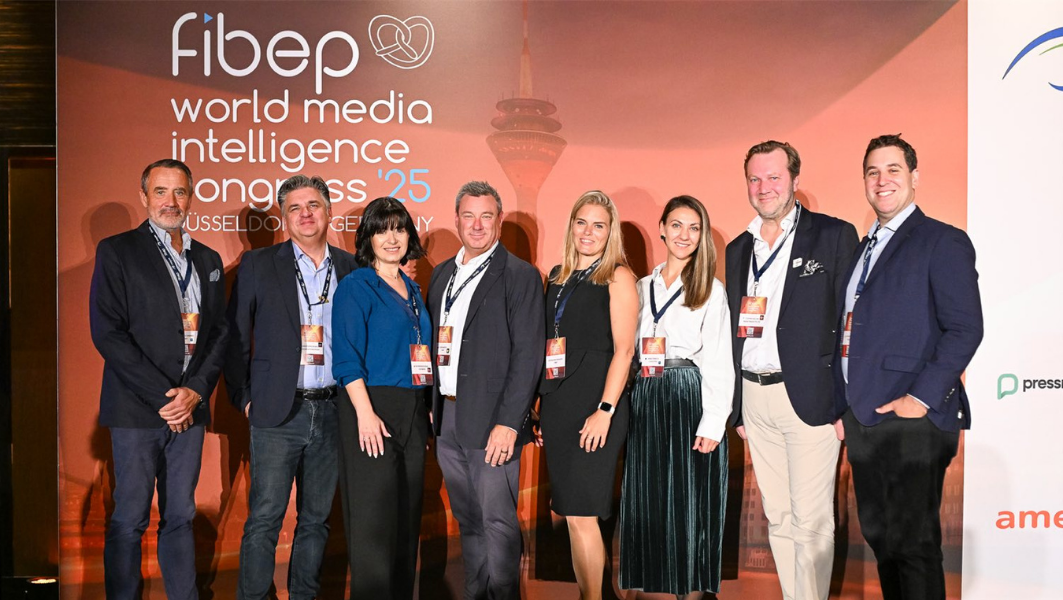
At this year’s FIBEP World Media Intelligence Congress 2025, held in Düsseldorf (September 30 – October 2), the Vice President of Clip News, Katerina Kechagia, was re-elected FIBEP Vice President for a second consecutive term, remaining responsible for the State of the Industry Survey. This honorary distinction reflects the international community’s trust in her work and dedication to the media intelligence sector.
The new Board of Directors of the International Media Monitoring Association (FIBEP) brings together the experience of professionals from across the globe. Alongside Katerina Kechagia, continuing their terms are Todd Murphy, Magdalena Horanska, Christophe Dickès, Natan Edelsburg, Steffen Egelund, Carlos Alfredo Diaz, Oresti Patricios, and Romina Gersuni, while the new members Anna Tsenova and Jon Anders Tangnes received a warm welcome.
During the Congress, Katerina Kechagia presented the results of the State of the Industry Survey 2025, the annual study that maps the evolution and outlook of the industry. Some of the key takeaways included:
- The industry maintains strong foundations and continues to demonstrate resilience, supporting growth prospects.
- The adoption of artificial intelligence and technological innovations is accelerating, transforming media monitoring services.
- Alongside progress, new challenges are emerging: intense competition, pricing pressures, changes in copyright regulations, and dynamic developments in human resources.
- Long-term success will depend on achieving the right balance between technology and human expertise, which remains irreplaceable.
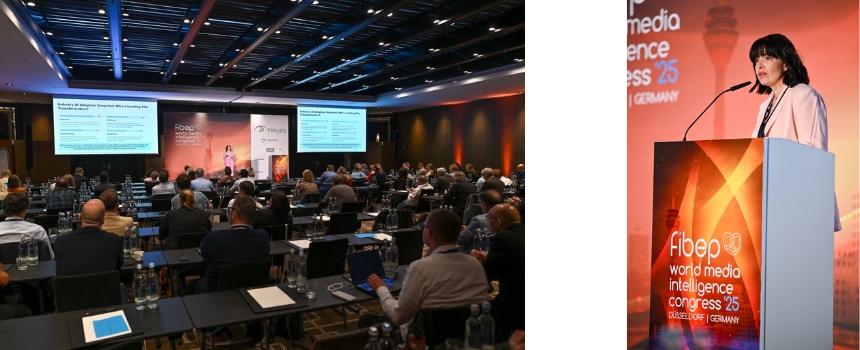
Katerina’s contribution to FIBEP’s State of the Industry Survey highlights the importance of international collaboration in understanding the trends shaping the future of media intelligence.
Learn more about the purpose and initiatives of the International Media Monitoring Association (FIBEP) here.

At Clip News, we firmly believe that managing digital reputation is a cornerstone for every modern business and organization. As information spreads at light speed, the ability to monitor, understand, and shape an online presence has become more critical than ever. Within this context, we are especially proud of our VP Media Intelligence, Katerina Kechagia, who participated as an instructor in the renowned “Online Reputation & Public Relations” program by Knowcrunch.
The Importance of Real-Time Media Monitoring
In today’s digital landscape, a brand’s reputation is continuously shaped across multiple channels. From social media and news sites to blogs and forums, every mention, comment, or post can significantly influence public perception. This is precisely where the value of real-time media monitoring comes into play, offering continuous tracking and analysis of all online content related to a brand.
In her session titled “Digital Reputation Management Strategy – Brandwatch”, Ms. Kechagia focused on this critical aspect. Through practical case studies and advanced use of the Brandwatch platform, participants had the opportunity to explore techniques and strategies that enable:
- Instant Detection: Identifying brand mentions in real time to respond quickly to both positive and negative comments.
- Deeper Understanding: Conducting sentiment analysis, categorizing topics, and identifying key influencers.
- Strategic Shaping: Turning raw data into actionable insights that drive effective communication strategies and crisis management.
Brandwatch: A Cutting-Edge Tool
Brandwatch, one of the world’s leading media intelligence platforms, offers a comprehensive suite of functionalities for monitoring and analyzing data from online sources. In Ms. Kechagia’s session, participants explored its capabilities, including:
- Dashboards: Customizable dashboards for quick overviews of essential metrics.
- Mention Sources: Identifying where the brand is being discussed (social media, news sites, forums, blogs).
- Sentiment Analysis: Assessing whether mentions are positive, negative, or neutral.
- Tagging & Filters: Organizing and filtering data for targeted analysis.
- Analytics Overview: A holistic view of digital reputation performance.
- Topics & Authors Analytics: Detecting trending discussion themes and identifying influential voices (influencers, brand advocates).
- Alerts: Automated notifications for critical mentions related to your brand.
Commitment to Education and Innovation
Our participation in such a significant program highlights Clip News’ commitment to knowledge sharing and innovation in media analytics. As a company, we continuously invest in enhancing our tools and methodologies, ensuring that brands receive the most comprehensive and effective media monitoring solutions for reputation management.
We are convinced that continuous learning is the key for the communication and marketing industry to stay one step ahead of change. Learn more about the “Online Reputation & Public Relations” program by Knowcrunch and Ms. Kechagia’s contribution on knowcrunch.com.

On June 18, 2025, as part of the “PR in Cannes” event, hosted by the International Communications Consultancy Organisation (ICCO), an insightful and timely panel discussion took place titled “Driving Measurable Impact in Media Intelligence & PR”, featuring three leading professionals in the field:
- Katerina Kechagia, Vice President of Clip News and of FIBEP
- Florian Laszlo, CEO of Austrian company OBSERVER
- Zuzana Richterova, Secretary of FIBEP
The discussion was held on LBB Beach, in a dynamic and quite hot setting (both literally and figuratively), where professionals from the fields of public relations, media monitoring, and data analysis exchanged views on the current state and prospects of the media intelligence industry.
What is Media Intelligence
As introduced by Zuzana Richterova, media intelligence refers to the process of monitoring, collecting, analyzing, and interpreting content from various media sources (print, digital, broadcast, and social) to extract meaningful insights about reputation, communication strategy, and decision-making for organizations and brands.

Key Challenges and Trends
In her remarks, Katerina Kechagia presented the findings of the latest “State of the Industry Survey” (SOI) by FIBEP, the World’s Media Intelligence Association:
- Stability and Resilience: 90% of companies in the industry expect stable or growing revenues over the next year. Media intelligence proves to be resilient and an essential service for businesses.
- AI – From Future to Present: One-third of companies already use AI for services such as content categorization, sentiment analysis, and language processing. AI accelerates workflows but also reshapes cost structures and client expectations.
- “More for Less” Mentality: Clients demand more insights, faster delivery, and lower cost. The pressure on efficiency requires service redesigns.
- Need for New Skills: 60% of companies report the need to retrain their staff to keep up with technological developments.
- Content Licensing: The biggest obstacle is the absence of a consistent global framework for fair, clear, and sustainable content use, which creates inequalities, costs, and legal uncertainties.

Media Rights Trust Initiative
Florian Laszlo presented FIBEP’s “Media Rights Trust Initiative” (MRTI), a step toward fairer content licensing. Its aim is to build a collaborative framework among media monitoring agencies, publishers, PR professionals, and Collective Management Organizations (CMOs) by:
- Creating unified and transparent content licensing models
- Balancing cost with value
- Promoting innovation while reducing legal uncertainties
Next Steps
Anyone interested in learning more about the “Media Rights Trust Initiative” can visit fibep.info/mrti.
Industry professionals are expected to gather again at the World Media Intelligence Congress, which will take place this year in Düsseldorf, from September 30 to October 2, 2025.
 Portal Login

